From: http://www.jrf.org.uk/blog/2012/09/hardening-attitudes-benefit-scroungers
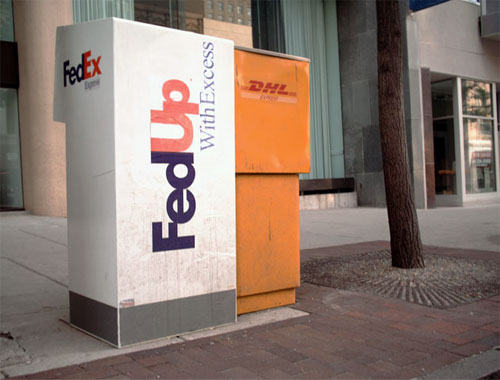
international brands being corrupted; misspelt coca cola signs, child labourers wearing D&G etc. Musings on social innovation by www.twitter.com/caseymorrison
Wednesday, 26 September 2012
Sunday, 23 September 2012
Saturday, 22 September 2012
Tuesday, 18 September 2012
How the national trust is finding its mojo.. (from @guardian)
(Here's the reason i left third sector infrastructure to join the national trust.
Progress is slow-ish, as you can expect in a massive org, but i can guarentee it is happening..- The bold highlighting is mine - warning LONG..)
How the National Trust is finding its mojo
"The National Trust's look-but-don't-touch mantra is out. Now it wants to open up its land and houses to local people, be it for school plays, dressing up, camping or vegetable plots. And it's all starting in a newly acquired pile in Northumberlan The Guardian. Feb 2011
Seaton Delaval Hall in Northumberland was saved by the fundraising efforts of 11,000 local people.
A few minutes' drive from Newcastle central station, at the end of a mile-long, tree-lined avenue, the National Trust's newest acquisition rises dramatically from sweeping lawns against a ragged Northumbrian sky. Designed by Sir John Vanbrugh, architect of Blenheim Palace and Castle Howard, Seaton Delaval Hall was completed in 1731 and, though badly damaged by fire in 1822, retains all its stark splendour. In the view of most experts, it is probably the finest surviving example of the English Baroque.
We know the National Trust, don't we? At least, we think we do. It occupies a place in our national consciousness roughly akin to that of the BBC: uniquely British, a treasured national institution without which the nation would be infinitely the poorer; broadly speaking a Good Thing. Astonishingly, some 3.8 million of us (up 300,000 in the last three years) pay its annual membership fees of between £35.63 for a single adult to £61.50 for a family, and 55,000 of us volunteer in the 600,000 acres of countryside, 700 miles of coastline and 350-plus historic houses and gardens that it presides over for, in the words of its founder Octavia Hill, "the everlasting delight of the people". Last year, we visited those properties just under 15m times (18% more often than in 2008); we breathed the fresh air of the trust's open spaces more than 100m times.
But that doesn't stop us having a go at it, of course: exclusive, elitist, samey, paternalistic, look-but-don't-touch, corporate, bureaucratic, over-centralised, too little imagination, too much top-down, not enough bottom-up.
"Walk into any National Trust property in the country," its critics cry, "and you could be in any National Trust property in the country." For Tim Smit, creator of the Eden Project, it "peddles comfy nostalgia" and "nurtures a perception that the past was a better place". It's an aristocrats' appreciation society; a playground for the middle-aged middle class. (Those are the critics on the left. On the right, some feel the trust has already dumbed down so much it has debased all it's supposed to be about. There's not much to be done about them, I fear.)
But all this makes what the trust is doing at Seaton Delaval, the testbed for a radical new strategy it will unveil at a press conference in London this morning, quite interesting. For starters, says Jane Blackburn, a newcomer on the regional committee, the acquisition itself was unique: it came about only after the trust had consulted 100,000 people, and when locals had, in six months, in the teeth of a recession, raised nearly £1m of the £3m the organisation needed to find. And this was, she says, "in a part of the country that is not, frankly, one of the wealthiest, and most of whom have never visited a trust property, let alone joined". In all, more than 11,000 local people came to four very un-trust fundraising events that they themselves organised: cows were auctioned, a teenage girl gave up her mobile phone for a week and donated the money she'd saved, collection boxes were placed in every local pub and cafe.
"The trust knows it is Organisation A," says Blackburn.
"It wants to become Organisation B.
This is the property that will help it get there. Right from the start, the approach here was different." The difference, says Susan Dungworth, a plain-speaking local councillor and one of the Seaton valley residents most passionate about the project, was that "the National Trust didn't come here and say it wanted to make Seaton Delaval a major attraction. It didn't say, this is our finest piece of 18th-century architecture, and here's what we're doing with it. It said, we want this place to be a local resource; serve the community. Of course I was wary to start with: I thought it was just a way for them to raise more money, and they'd go back to doing things the way they normally do. So far, they haven't."
So far, so spirit of the age. What might this mean in practice? Among other ideas, the group plans to breathe new life into several of the hall's other rooms, turning one, for example, into an After the Party zone complete with cast-off coats, half-filled glasses and the lingering odours of wine and pipe smoke. There will be fireplaces with blazing log fires and sitting rooms you can actually sit in, on period furniture (though maybe not the Chippendale). There will be dressing-up in the east wing, a fantastical lumber room of hats, swords, crackling old 78s and black-and-white family photos; camping in the grounds; adventure trails in the woods; leek-growing competitions. The volunteers, says Dungworth diplomatically, "are not all what you'd call your traditional National Trust-type volunteer". In short, says Blackburn,
Seaton Delaval "is basically going to be a huge great village hall, that happens to have been designed by Vanbrugh". If all this alarms the trust's more traditional adherents, they are making a fair stab at disguising it. "I'm one of the old 'look and learn' school, I have to confess," observes Dixon, who first visited the hall as an undergraduate nearly half a century ago. "I've had to loosen my stays a little. But I'm completely in agreement with all this. We'll still be looking after all these wonderful things, you know. Just in a rather more generous, a rather less cautious sort of way. I'm a curator, not a conservator."
Mick Wilkes – whose background is solidly in community development – has turned the walled garden into a sort of mini social services: four local schools have growing plots there, as do patients from the secure ward of a local NHS hospital and Norcare, a charity supporting the socially and economically excluded. There's a booming farmers market, and Wilkes got the local cubs and scouts in for a weekend to design a wild woodland playscape complete with log bridges, tunnels and climbing walls. There's a family campsite up the hill, and the derelict stables have been turned into a residential centre for schools and youth groups and workspace for the local arts and crafts community. A local writer, Lynn Huggins-Cooper, organises creative writing and storytelling events for all ages, and ghostwalks in the woods.
"The idea, really, is to get all the doors open, and keep them open," says Wilkes. "It's about saying 'Yes', not 'No'." Down in the south-west, Simon Garner, who as area warden for south Devon looks after 12 miles of coast and 3,000 acres of land, said "Yes" when a local association in Wembury asked if it could have some for allotments. "They didn't expect it," he says. "A few years ago we were definitely seen as aloof. We did a policing job.
"Community engagement was something you tried to bolt on, as an afterthought. Now it's the starting point." Sitting in a mullioned room in exquisite Cotehele, overlooking the Tamar river, Tamsin Butler, in charge of innovation for the trust's outdoor spaces in the region, says the organisation is "discovering its ears". Butler is working on encouraging more camping on National Trust land, more mountain biking, more woodland gyms, more tree-surfing, more kayaking.
"We have to break down those barriers, show we have something for everyone." One innovation has been to take on Robyn Davies, a startlingly dynamic former British surfing champion who has organised a series of high-profile events raising the trust's profile and relevance among an audience far removed from its traditional base. Besides holding paddling contests, beach clean-ups and the inaugural World Bellyboard Championships, Davies has recruited six of the country's leading surfers as National Trust ambassadors. All ride with NT stickers on their boards. "The trust has 40% of the coastline in Devon and Cornwall," she says.
"It's about connecting people to that environment, making them understand the importance of looking after it. It's a small thing, but it's kids saying: 'My hero surfs on a National Trust logo. My gran belongs to that. What's that all about?'" The perennial battle inside the trust has always been that between conservation and access, preservation and enjoyment. "But really, it needn't be," insists Harold. "Not every room in every built property has precious textiles. We own lots of land; not all of it is equally sensitive." Marching through Plym Bridge woods, Colston agrees:
"We've been a properties and places organisation; we need to be a people and activities organisation." There is, plainly, enthusiasm on the ground for the trust's new strategy. For director general Fiona Reynolds, Going Local is both perfectly timed, and "a liberation for a lot of us". In the past, she says, "I think somehow we've lacked confidence. It has been reassuring to us to give out a message that we're only for certain kinds of people, that we're country houses and cream teas. And don't get me wrong; those people are very important to us, and always will be. "But paradoxically, the recession has given us confidence. People voted with their feet. It's proved to us there's an almost visceral human need for beauty, for places to escape to, to reconnect, to enrich our lives." Will there be opposition? "There are, obviously, things that need protecting," says Reynolds, carefuly. "But we have been a little too 'Look, but don't touch'. We're not out to trash the collections, obviously not. What we're saying is: 'You may not be able to touch this. But look what you can touch!'
In the end, if we're to truly fulfil our original, radical purpose, we have to reach out in this way – to local residents, to people who feel the National Trust isn't for them. We have to make contact with people in a new way."
www.guardian.co.uk/culture/2010/feb/10/national-trust-opens-its-doors
But that doesn't stop us having a go at it, of course: exclusive, elitist, samey, paternalistic, look-but-don't-touch, corporate, bureaucratic, over-centralised, too little imagination, too much top-down, not enough bottom-up.
"Walk into any National Trust property in the country," its critics cry, "and you could be in any National Trust property in the country." For Tim Smit, creator of the Eden Project, it "peddles comfy nostalgia" and "nurtures a perception that the past was a better place". It's an aristocrats' appreciation society; a playground for the middle-aged middle class. (Those are the critics on the left. On the right, some feel the trust has already dumbed down so much it has debased all it's supposed to be about. There's not much to be done about them, I fear.)
But all this makes what the trust is doing at Seaton Delaval, the testbed for a radical new strategy it will unveil at a press conference in London this morning, quite interesting. For starters, says Jane Blackburn, a newcomer on the regional committee, the acquisition itself was unique: it came about only after the trust had consulted 100,000 people, and when locals had, in six months, in the teeth of a recession, raised nearly £1m of the £3m the organisation needed to find. And this was, she says, "in a part of the country that is not, frankly, one of the wealthiest, and most of whom have never visited a trust property, let alone joined". In all, more than 11,000 local people came to four very un-trust fundraising events that they themselves organised: cows were auctioned, a teenage girl gave up her mobile phone for a week and donated the money she'd saved, collection boxes were placed in every local pub and cafe.
"The trust knows it is Organisation A," says Blackburn.
"It wants to become Organisation B.
This is the property that will help it get there. Right from the start, the approach here was different." The difference, says Susan Dungworth, a plain-speaking local councillor and one of the Seaton valley residents most passionate about the project, was that "the National Trust didn't come here and say it wanted to make Seaton Delaval a major attraction. It didn't say, this is our finest piece of 18th-century architecture, and here's what we're doing with it. It said, we want this place to be a local resource; serve the community. Of course I was wary to start with: I thought it was just a way for them to raise more money, and they'd go back to doing things the way they normally do. So far, they haven't."
'A cultural revolution for the trust'
According to its strategy document, the Going Local programme will require nothing less than "a cultural revolution for the trust", "a new mindset and a new way of working". Yet it is essential, the organisation reckons, if it is to shake off the perception that "we are some sort of exclusive club for connoisseurs". In an objective dear to the heart of its outspoken chairman, the writer and commentator Simon Jenkins, the trust concedes it must "loosen up", "bring places more to life". Above all, it says, it needs to "put all our properties, built or natural, back at the centre of today's communities," fostering "local pride and a genuine sense of belonging".So far, so spirit of the age. What might this mean in practice? Among other ideas, the group plans to breathe new life into several of the hall's other rooms, turning one, for example, into an After the Party zone complete with cast-off coats, half-filled glasses and the lingering odours of wine and pipe smoke. There will be fireplaces with blazing log fires and sitting rooms you can actually sit in, on period furniture (though maybe not the Chippendale). There will be dressing-up in the east wing, a fantastical lumber room of hats, swords, crackling old 78s and black-and-white family photos; camping in the grounds; adventure trails in the woods; leek-growing competitions. The volunteers, says Dungworth diplomatically, "are not all what you'd call your traditional National Trust-type volunteer". In short, says Blackburn,
Seaton Delaval "is basically going to be a huge great village hall, that happens to have been designed by Vanbrugh". If all this alarms the trust's more traditional adherents, they are making a fair stab at disguising it. "I'm one of the old 'look and learn' school, I have to confess," observes Dixon, who first visited the hall as an undergraduate nearly half a century ago. "I've had to loosen my stays a little. But I'm completely in agreement with all this. We'll still be looking after all these wonderful things, you know. Just in a rather more generous, a rather less cautious sort of way. I'm a curator, not a conservator."
Conservative culture
It all sounds extremely laudable. To what extent, though, might it be it just one big PR exercise – a cosmetic squall of political correctness blowing down the cobwebbed corridors of an institution born, more than a century ago, of a somewhat unlikely alliance between a bunch of liberal, paternalistic aristocrats (who stumped up the money) and some fairly radical Christian socialists whose principal aim was to create "open-air sitting rooms" for the urban poor? The proof of the pudding, plainly, will be in the eating. There are people in the trust who feel the organisation's culture is so conservative that this initiative will not last the year. Others worry that, bureaucratic as the trust is (although less than it used to be: it is now run by a 12-member board of trustees rather than a 52-member, largely unelected council), it has accomplished a lot, and devolving big decisions to local property managers could be fatal. Still others argue that the corporate clout of a big brand may have produced a certain uniformity of experience, but has also helped secure the trust's barely break-even finances. Clearly the change will be far-reaching, and difficult for some. But around the country, there are already other properties and projects showing how it might work. In Gibside, the 600-acre former estate of the Bowes-Lyon family just outside Gateshead,Mick Wilkes – whose background is solidly in community development – has turned the walled garden into a sort of mini social services: four local schools have growing plots there, as do patients from the secure ward of a local NHS hospital and Norcare, a charity supporting the socially and economically excluded. There's a booming farmers market, and Wilkes got the local cubs and scouts in for a weekend to design a wild woodland playscape complete with log bridges, tunnels and climbing walls. There's a family campsite up the hill, and the derelict stables have been turned into a residential centre for schools and youth groups and workspace for the local arts and crafts community. A local writer, Lynn Huggins-Cooper, organises creative writing and storytelling events for all ages, and ghostwalks in the woods.
"The idea, really, is to get all the doors open, and keep them open," says Wilkes. "It's about saying 'Yes', not 'No'." Down in the south-west, Simon Garner, who as area warden for south Devon looks after 12 miles of coast and 3,000 acres of land, said "Yes" when a local association in Wembury asked if it could have some for allotments. "They didn't expect it," he says. "A few years ago we were definitely seen as aloof. We did a policing job.
"Community engagement was something you tried to bolt on, as an afterthought. Now it's the starting point." Sitting in a mullioned room in exquisite Cotehele, overlooking the Tamar river, Tamsin Butler, in charge of innovation for the trust's outdoor spaces in the region, says the organisation is "discovering its ears". Butler is working on encouraging more camping on National Trust land, more mountain biking, more woodland gyms, more tree-surfing, more kayaking.
"We have to break down those barriers, show we have something for everyone." One innovation has been to take on Robyn Davies, a startlingly dynamic former British surfing champion who has organised a series of high-profile events raising the trust's profile and relevance among an audience far removed from its traditional base. Besides holding paddling contests, beach clean-ups and the inaugural World Bellyboard Championships, Davies has recruited six of the country's leading surfers as National Trust ambassadors. All ride with NT stickers on their boards. "The trust has 40% of the coastline in Devon and Cornwall," she says.
"It's about connecting people to that environment, making them understand the importance of looking after it. It's a small thing, but it's kids saying: 'My hero surfs on a National Trust logo. My gran belongs to that. What's that all about?'" The perennial battle inside the trust has always been that between conservation and access, preservation and enjoyment. "But really, it needn't be," insists Harold. "Not every room in every built property has precious textiles. We own lots of land; not all of it is equally sensitive." Marching through Plym Bridge woods, Colston agrees:
"We've been a properties and places organisation; we need to be a people and activities organisation." There is, plainly, enthusiasm on the ground for the trust's new strategy. For director general Fiona Reynolds, Going Local is both perfectly timed, and "a liberation for a lot of us". In the past, she says, "I think somehow we've lacked confidence. It has been reassuring to us to give out a message that we're only for certain kinds of people, that we're country houses and cream teas. And don't get me wrong; those people are very important to us, and always will be. "But paradoxically, the recession has given us confidence. People voted with their feet. It's proved to us there's an almost visceral human need for beauty, for places to escape to, to reconnect, to enrich our lives." Will there be opposition? "There are, obviously, things that need protecting," says Reynolds, carefuly. "But we have been a little too 'Look, but don't touch'. We're not out to trash the collections, obviously not. What we're saying is: 'You may not be able to touch this. But look what you can touch!'
In the end, if we're to truly fulfil our original, radical purpose, we have to reach out in this way – to local residents, to people who feel the National Trust isn't for them. We have to make contact with people in a new way."
www.guardian.co.uk/culture/2010/feb/10/national-trust-opens-its-doors
Quotes and thoughts from the nationaltrust Going Local strategy.. #localism
"If we're to truly to fulfil our original, radical purpose, we have to reach out in this way – to local residents, to people who feel the National Trust isn't for them. We have to make contact with people in a new way.."
So what might this mean - here's some some suggestions from me:
- Hyper-local = Going-Local, discover possibilities together.
- When we were little we were all artists, inventors, engineers and visionaries of a new world.
- New community culture/ - school plays, dressing up, camping or vegetable plots.
- Releasing community potential close to where it lives.
- Tapping into the wealth of knowledge and experience that exists in our vast supporter base.
- Using buildings in different way (Seaton Delaval Hall "is basically going to be a huge great village hall, that happens to have been designed by Vanbrug”).
- Reconnecting people with their special places.
- Allow people to enrich their lives, to grow things..?
- We've been a properties and places organisation; we need to be a people and activities organisation..
- Freedom within a framework that links strategic visioning of a large organisation with mass participation in defining what they means and having the freedom to get on with it.
Wednesday, 12 September 2012
Saturday, 8 September 2012
Some thoughts on prison and violence and new models of living..?
I've been reading Wasted by Mark Johnson and I've picked out a few extracts about his time in prison:
- Violence in prison is not that different from the violence that many offenders have faced in early life.
- The violence in the system reinforces the notion that violence is a normal and acceptable part of life outside prison.
- The violence in prison makes it easier for released offenders to act and see themselves as an offender and not think twice about more violence.
- People become what we they do. So prison is a pretty good way of making hardened violent life-criminals..
So i've been thinking a lot recently about the cost of keeping one human being alive. Keeping myself in food and shelter currently costs quite a lot of money. but we could organise it so that the basic living of food and shelter was much much much much cheaper. we just have to change the system.
so what could all this look like..?
- Camphill community in wakefield is a pretty good example. have a look: http://www.pennine.org.uk/community/index.php
What about buying a big old house somewhere (on a mortgage through a company) and setting up a house for people leaving prison, or needing respite, but on their own terms. we could call it turnaround or something. So they wouldn't be stuck in a flat on their own, but neither would they be part of any scheme. we grow the food we need, and people come and go.
does this sound so stupid?
would people just abuse it?
have catch 22 or someone already done this?
does it sound too much like a cult?
is it ridiculous putting people's choices in their own hands?
Thursday, 23 August 2012
Active leisure time - what gym membership says about potential volunteering..
Firstly some stats from market research world:
- Almost 4.5 million UK adults (15+) have a gym membership, an increase of almost a million since 2000.
- A third of them are aged 15 to 24 and they are over 60% more likely than the average adult to be single. Since 2000, the number of gym members aged 65+ has increased almost 70%.
- Only 27% of gym members regularly go to the gym.
- Their average household income is 35% higher than that of the average adult.
- They are 18% more likely than the average adult to be heavy consumers of chocolate bars.
- However, over a third of gym members always think of the calories in what they eat.
- They are over 50% less likely than the average adult to specially choose to watch Heartbeat.
- Gym members are over twice as likely as the average adult to be in the highest quintile for cinema exposure.
- They are over 50% more likely than the average adult to agree that when they need information, the first place they go is the internet and they are over 60% more likely than the average adult to access health-related websites.
- Female gym members will spend on average 35% more on shoes and 29% more on handbags than the average woman.
So what can we learn from this growth about volunteering. We know we're moving from 'obligation-led' volunteernig to 'fun-led' volunteering (see @ncvo participation stats)
There are parallels between the civic core, and the education levels of gym goers.
Could we realistically see a massive increase in people who want to move "from viewing to doing" in their leisure time..?
Could we build something that meets their needs..?
Sunday, 19 August 2012
What can we learn from all the "what can we learn from" blogs on the Olympics volunteers..?
Remember there were 240,000 applicant, 40% of whom had never volunteered before.
If nothing changes, will return to non volunteering in a few weeks. Here's a few links of interesting commentary:
- Can the Olympic experience help change the face of volunteering? http://www.guardian.co.uk/voluntary-sector-network/2012/jul/19/olympics-change-face-volunteering
- A blog from phil coogan from nesta about where we take this: http://www.nesta.org.uk/blogs/public_services_lab_blog/Standing%20out%20from%20the%20crowd
- Guardian professionalblog: http://www.guardian.co.uk/sport/2012/jul/17/london-2012-games-makers-800-roles
- A forum for people looking for accommodation that showed these new volunteer organising themselves (like a local version of airb&b or couchsurfing..?) http://www.gm2012accommodation.org.uk/default.aspx?g=forum
- A few 'sector leaders' opinions http://www.guardian.co.uk/voluntary-sector-network/2012/aug/07/best-bits-olympic-legacy-volunteering
- Gamesmakers on facebook (1,700 of them organising on the most simple of social networking sites, which is maybe what works when you have a strict time bound purpose..) http://www.facebook.com/2012VolunteerGamesmaker
- The End of Volunteering article (which touches on many of these themes..) http://wearewhatwedo.org/the-end-of-volunteering
- This from the Telegraph on the weekend of getting involved in local sports clubs.. http://www.telegraph.co.uk/sport/olympics/news/9473635/London-2012-100000-volunteers-sign-up-to-Keep-The-Flame-Alive.html
Soooooooooooooooo what's next..? What's stopping something happening with this energy, this passion for change..?
My top two suggestions would be would be
- a sense of urgency,
- a genuinely people focussed approach.
Will gamesmakers come back home and be the change..?
The most interesting thing to come out is wewillgather, but more on that later..
(tweet the #WeWillGather hashtag, a postcode and the word ‘help’..)
Profile of the new director general of the national trust..
So what can we expect from Dame Helen Ghosh as the new director general of the national trust..? She's 56 so she might be around for less than 10 years..? She has inherited a period of rapid change, so she will implement someone else's change programme. She was chosen ahead of people in the cultural sector, maybe reflecting a strong board who want to lead and an objective eye on how the change is progressing.
Based on a www.bbc.co.uk/iplayer/console/b01lz7yf
Simon Jenkins, the Chairman said "we wanted a strong leader who could get to grips with different part of the organisation that need addressing. Someone who could be a little unpopular. its a bit of a gamble from her, a bit of a gamble from us. but one we were prepared to take.
"A civil service background didn't naturally offer what we wanted. we're waiting to see. it will be very interesting. she has significantly organisational skills which is what we need.
"I asked her at interview: what would it be like if you had a make a speech against the government. she said she can't wait"
In conclusion, according to radio 4 "They will be led by a figure who has been at the head of leading change in organisations and institutions.
"Trust members and staff should be prepared for change.."
Based on a www.bbc.co.uk/iplayer/console/b01lz7yf
Simon Jenkins, the Chairman said "we wanted a strong leader who could get to grips with different part of the organisation that need addressing. Someone who could be a little unpopular. its a bit of a gamble from her, a bit of a gamble from us. but one we were prepared to take.
"A civil service background didn't naturally offer what we wanted. we're waiting to see. it will be very interesting. she has significantly organisational skills which is what we need.
"I asked her at interview: what would it be like if you had a make a speech against the government. she said she can't wait"
In conclusion, according to radio 4 "They will be led by a figure who has been at the head of leading change in organisations and institutions.
"Trust members and staff should be prepared for change.."
Saturday, 11 August 2012
York 's voluntary sector strategy in 2 pages..
Components of York 's voluntary sector strategy: - see what you think..
1. More people getting involved in their communities
2. A constructive dialogue between sectors is established and valued
3. Strong voluntary sector infrastructure that can support high quality services and volunteering
4. Commissioning and funding frameworks that are needs led and offer value for money
5. A city wide asset strategy that recognises the social value in communities taking ownership of their facilities and empowers people to take an active role in creating what they know is needed in their community.
Outcome 1; More people getting involved in their communities
Volunteering is a powerful force for change, both for those who volunteer and for the wider community. Together we can support the development of valuable social networks that will strengthen community involvement in the life of the city through
- To further develop neighbourhood networks, such as time banking
- To promote and embed York 's Volunteering Charter across the partners
- To make sure volunteering meets the needs of the most vulnerable people in the City.
Outcome 2; A constructive dialogue between sectors is established and valued
The voluntary sector has a wealth of experience that can be of great benefit to policy-makers in the statutory sector, by contributing to effective policy development. The voluntary sector also has a key role in enabling the voice of the community to be heard. This applies particularly to some excluded groups who may be reluctant to engage with statutory partners through: A joint approach to widen our collective reach. A commitment to finding practical ways to maximise voluntary sector representation on key decision-making groups.
Outcome 3; Strong voluntary sector infrastructure that can support high quality services and volunteering
In order for voluntary sector organisations to contribute successfully to the delivery of high quality services, they need support which meets the needs of a wide range of types of groups in different stages of their development. Through: Increasing the opportunities for communication and collaboration between the voluntary sector and its partners, including the private sector, via mainstreaming of the successful elements of the Transforming Local Infrastructure Project.
Outcome 4; Commissioning and funding frameworks that are needs led and offer value for money
In the current economic climate it is vital that we work together to establish a robust financial relationship by developing innovative ways of funding services, supported by quality assurance and monitoring. A joint commissioning and funding framework will help partners take a considered and consistent approach to funding and contracting with the voluntary, community and private sector.
Priority actions could include: A review of how to improve joint commissioning, given that we have new commissioners emerging, such as the Clinical Commissioning Group or To introduce an integrated commissioning and funding framework by September 2013.
Outcome 5; A city wide asset strategy that recognises the social value in communities taking ownership of their facilities and empowers people to take an active role in creating what they know is needed in their community.
Priority actions could include: Joint mapping of assets leading to a directory of spaces
Thougths..?
Guardian article on the national trust - pros and cons of "going local"..
Here's an editorial from the guardian in 2010 on the national trust..
"It is difficult to conceive of a body as conservative (with a small c) as the National Trust undergoing its very own cultural revolution. Smashing the liberal bourgeoisie is not the first thought that leaps to mind as you munch your way through a slice of coffee and walnut cake in the orangery. But their new strategy, Going Local, which the trust unveils this morning, would represent something of a sea change in the culture of a body dedicated to preserving heritage, and with it healthy servings of tradition.
The idea of re-establishing the involvement of local communities in the great houses and parks in their midst has much merit. Nearly one-third of the £3m needed to rescue Seaton Delaval Hall in Northumberland, one of England's finest stately homes, was raised locally. So why shouldn't a former miner write in the guidebook about the coal on which much of the Delavals' wealth was founded?
(and here's a comment underneight that sums up the (equally valid IMHHO) counterview..)
10 February 2010 4:08AM
Monday, 30 July 2012
Notes from Barriers to Engagement event in July 2012..
Aim: how to “dismantle the barriers to people engaging in a city”
Or “how to make our institutions more like us/ work for us”
Apathy = "without pain"
Learned helplessness
= learned rationally not to try
- Map out how the “engagement” process looks like from a user point of view..?
- What are their motivations for attending..?
- Can we use “volunteering as staff development?”
- “choice based architecture”
- Teach the problem away
Sortition –
representative community democracy (on the hawkesworth estate? Major of
hawkesworth?) 20 people drawn lots on how the city progresses.
Driven by
citizens
|
Driven by structures
|
Engagement
|
Or association
|
Mapping out entry points:
- Networks socially mapped
- Growing social capital
- Skills, relationship
Barriers to Engagement list:
- past experiences
- beauracracy/ staff structures
- local communication methods – noticeboards
- capability and capacity of staff
- no time ticking on an issues (chronic rather than acute issues)
- cynicism
- don’t understand the decision making structures
- suspition of certain institutions
- specifics groups harder to engage (younger/ BME)
- cronyism – usual suspects
- lack of a strong cause
- jargon
- cultural barriers over processes
- time to engage
- measureing progress
- the way we are viewed/ boxed in
- assumptions of identity
Drivers of engagement
|
Engagement forcefield
|
Barriers to
engagement
|
Politics
|
Cuts
|
|
innovation
|
Confidence & capability
|
|
Lack of cash
|
Travel
|
|
Deprofessionalisation of orgs
|
Money
|
|
Cronic health & social lcare
|
information | |
Better services in tough time
|
Culture of host orgs
|
Sunday, 29 July 2012
An irreverent history of the institution of the National Trust..
I'm not really interested in stately homes, so I'm not suggesting this is the definitive truth, but i want to look at where our national institution is going in context of a brief biased history. If this is not for you try the book on the right.. ;-)
So where next?
- 1893 formed by an odd marriage of social reformers and establishment elites.
- 1930s gets given land from early enthusiasts
- 1960s gets given country houses in lue of death taxes
- 1980s spends millions renovating land and buildings
- 2000s gets commercial and offers days out for masses
So where next?
There will always renovation needing doing, but much less than previously as the large scale stuff is done, and without new acquisitions (with happen but won't be on the scale of previous ones) and maintainance costs comparatively are low with the current sound business model.
So?
- There are some interesting ideas going round about relevance (more on this later, but have a look at soho stories)
- the next 10 years will be bumper years as more people retire early and relatively affluently enjoy their leisure time and are able to volunteer for the organisation. They are also likely to have assets on death which can be offered as legacies.
- the commercialisation, professionalism and branding of the organisation has polarised the previous core. the old trustees, the old guard are unhappy with the streamlining of trustee boards etc
- the new membership may see membership as an entry ticket more than membership. Brand profile shows diminishing recognition for the logo, and increased perception of the brand in certain contexts. But it may mean we have fewer members who buy membership every year for life. and we will see people who visit Historic Houses association instead (alternating years is quite popular)
- a shift from country living to urban living. penetration in urban areas is much lower. immigration means more people in cities, and more of the type of demographic who don't visit old crumbling stately homes. if these are the future. Current models of engagement like school visits, and previous projects with BME orgs (for example) may not have the sense of relevance to sustain new audiences.
- we may see a dip in interest in the old towards the modern sometime over the next 15 years. once everyone has had their fill of 18th Century furniture, and family trees etc..
The biggest danger imho is that this institution becomes irrelevant. It is incredibly powerful right now, and is doing some great things. I am interested in how it acts as a platform for others deciding its future. I think it needs to be built on people's passions. I think it is changing from an organisation to a movement, and in which case its needs to change what it does as well as how it is perceived. I think it is doing both..
This is a long term game.
Stuart Lee's mixed thoughts on the National Trust
Here's Stuart Lee's mixed thoughts on the national trust in 2011 - i've been a bit selective on pulling bits out (its basically having a go at the talking benches), but there's some interesting things in there..
"I have mellowed over the years, and now part of what lures me to National Trust properties is not hatred of the posh, but the sadness of these places and their stories, their quiet and dignified tragedy. Fellowes says he believes that the quest for social equality is a pointless folly. Certainly, the cultural and political achievements of the denizens of the Trust's inherited homes, understood through the artefacts they left behind, would seem to reveal them as our natural betters, if only because they had the resources to pursue finer things for their own sake.."
Saturday, 28 July 2012
What can we learn from the London games about volunteering..?
So LOCOG tells us 40% of 250,000 people who applied to volunteer for the 2012 games had never volunteered before.
Think about that.
And compare it with hundred of volunteer recruitment campaigns over the last 10 years. The London volunteers were prepared to pay for their own lodgings, travel and much more. The people who put together this programme were prepared to spend £1,000 a head. Not £8 a head on a Christmas lunch. Whatever you think of this - we are entering a very different world on volunteering. So why the marked difference between the do-gooding, and the feeling-part-of, the obligation and the celebration?
Ok, the pull of the games is different from the pull of helping out at a hospice, running a scout group or being a trustee of a user led organisation. I get a bit nervous working for the national trust that volunteering is a bit of fluff, that its not life-changing, wondering round some garden, or explaining conservation techniques in some peat bog. Also i find LOCOGs triumphalism a bit nauseating. So lets find somewhere between.
As far as I know the national trust is alone in undertaking huge research into the motivations of its volunteers. When we know what they want, we can hopefully build a better offer. But lets not pretend we can sidestep a lot of the existing volunteer centres, and volunteer recruitment campaigns and succeed overnight. Lets stop asking people to put their hands up in obligation, lets get the data on what motivates people, give them more of what they want, and build a fun sense of mutualism that fits better with the 21 Century.
Think about that.
And compare it with hundred of volunteer recruitment campaigns over the last 10 years. The London volunteers were prepared to pay for their own lodgings, travel and much more. The people who put together this programme were prepared to spend £1,000 a head. Not £8 a head on a Christmas lunch. Whatever you think of this - we are entering a very different world on volunteering. So why the marked difference between the do-gooding, and the feeling-part-of, the obligation and the celebration?
Ok, the pull of the games is different from the pull of helping out at a hospice, running a scout group or being a trustee of a user led organisation. I get a bit nervous working for the national trust that volunteering is a bit of fluff, that its not life-changing, wondering round some garden, or explaining conservation techniques in some peat bog. Also i find LOCOGs triumphalism a bit nauseating. So lets find somewhere between.
- There are a large number of people who, when they volunteer their time, want to do something with more impact than holding a hand, or keeping a church door open.
- Lots of these people don’t currently volunteer and beyond the baby boom bulge of the next 10 years (and increase of people with time on their hands, and in good health)
As far as I know the national trust is alone in undertaking huge research into the motivations of its volunteers. When we know what they want, we can hopefully build a better offer. But lets not pretend we can sidestep a lot of the existing volunteer centres, and volunteer recruitment campaigns and succeed overnight. Lets stop asking people to put their hands up in obligation, lets get the data on what motivates people, give them more of what they want, and build a fun sense of mutualism that fits better with the 21 Century.
Thursday, 26 July 2012
My book reviews of Nudge, Tribes, & Here Comes Everybody..!
Nudge: Nudge is the science of how people actually behave - not how we want or think they behave. What about collection tins shaped like seaside games, bins that thank dog walkers for clearing up mess, or reduce the public flow round certain parts of properties based on nudges in behavioural patterns..? Could this help us normalise and positively reinforce pro-social behaviour, which could help us mainstreaming volunteering beyond the 30% civic core.
Tribes: Thinking in Tribes creates self motivated subcultures. The tribe decides where the end goal is and how to get there. Leadership can come from anywhere, with the facilitated role of “keeping the balloon in the air”. Is it ok if everyone isn’t on-board right from the beginning..?
Leadership plain & simple: Can be summarised as: Think, Talk, Do.. ;-)Do you think "we are up to something together"..? Test your Leadership muscles:
- × What's your shadow of a leader?
- × Build BIG relationships
- × Analyse the gaps between yourself "just surviving" and "at your best". then look for the trigger points
Here comes everybody: My favourite book in the whole world. Clay Shirky expanded on it with a video called “organising without organisations” which is 20 mins of brilliance! Has links to microvolunteering, mass-amateurisation, and crowdsourcing. Lots to think about in how we create a movement from hundreds and thousands of individual parts.Does this offer is new forms of non hierarchical collaboration with massive disruptive potential..?
10 Ways to Sell Your Ideas the Steve Jobs Way.. (By Michael Gass)
Plan your presentation with pen and paper. Begin by storyboarding your presentation. Steve Jobs spent his preparation time brainstorming, sketching and white-boarding before he creating his presentation. All of the elements of the story that he wants to tell are thought through, elements are planned and collected before any slides are created.
- Create a single sentence description for every service/idea. Concise enough to fit in a 140-character Twitter post. An example, for the introduction of the MacBook Air in January, 2008, Jobs said that is it simply, “The world’s thinnest notebook”.
- Create a villain that allows the audience to rally around the hero—you and your product/service. A ‘villain’ doesn’t necessarily have to be a direct competitor. It can be a problem in need of a solution.
- Focus on benefits. This is important for ad agencies to remember. Your audience only cares about how your service will benefit them so lead with benefits rather than agency credentials and capabilities.
- Stick to the rule of three for presentations. Almost every Jobs presentation was divided into three parts. You might have twenty points to make, but your audience is only capable of retaining three or four points in short-term memory. Give them too many points and they’ll forget everything you’ve said.
- Sell dreams, not your services. Steve Jobs didn’t sell computers. He was passionate about helping to create a better world. That was the promise that he sold. For example, when Jobs introduced the iPod in 2001, he said, “In our own small way we’re going to make the world a better place.” Where most people see the iPod as a music player, Jobs saw it as a tool to enrich people’s lives.
- Create visual slides. There were no bullet points in a Steve Jobs’ presentation. Instead he relied on photographs and images. When Steve Jobs unveiled the Macbook Air, Apple’s ultra-thin notebook computer, he showed a slide of the computer fitting inside a manila inter-office envelope. Keep your agency presentation’s that simple.
- Make numbers meaningful. Jobs always put large numbers into a context that was relevant to his audience. The bigger the number, the more important it is to find analogies or comparisons that make the data relevant to your audience.
- Use plain English. Jobs’s language was remarkably simple. He rarely, if ever, used the jargon that clouds most presentations—terms like ‘best of breed’ or ‘synergy’. His language was simple, clear and direct. So don’t use agency speak when presenting, “integration, proprietary process, etc.”
- Practice, practice, practice. Steve Jobs spent hours rehearsing every facet of his presentation. Every slide was written like a piece of poetry, every presentation staged like a theatrical experience. Steve Jobs made a presentation look effortless but that polish came after hours and hours of arduous practice. Agencies often are forced to rely on spontaneity to provide creative energy for a pitch because they have spent all of their time on putting together the presentation and leave little or no time for rehearsal. Most unrehearsed pitches end up falling flat.
By Michael Gass..
Tuesday, 24 July 2012
A culture change at the national trust..?
Here's some quotes from the national trust strategy document Going Local (and the reason i joined the organisation - to work on volunteering & community invovement):
"This strategy means nothing
less than a cultural revolution for the Trust. It demands a new mindset and a
new way of working."
- A small, determined pressure group has evolved into today’s mass movement. It belongs to you whether we’ve paid a subscription or not.
- We were founded more than a century ago for the benefit of the whole nation, including those who still feel that the National Trust is for some reason ‘not for people like us’.
- we want wherever possible to make our answer ‘yes’ not ‘no’.
- Each property must nurture a web of human links.
- We must challenge the perception that we are some sort of exclusive club for connoisseurs.
- we will change our mindset from owning places for people, to owning
places with them.
We must renew these relationships to foster a greater sense of shared ownership. - Some people still feel that the Trust is exclusive or remote. We will involve them in our decisions and challenge our own tendency to act as proprietors not facilitators.
- We’re developing open dialogues with local communities about new uses for our properties.
- We are rethinking how we use our land in a more creative way.
- By the early 1990s the village school, shop and pub in Cwmdu, near Llandeilo, Carmarthenshire, had closed – a real loss to this rural community. The Trust bought the rundown terrace, which included a pub, shop and two dwellings, to help preserve the hamlet, working together with the local community.
- It’s time to move from a hierarchical approach.
- We are starting: new opportunities for public access to our land for food production.
- We pledged 1,000 new allotment ‘growing spaces’ by 2012 as part of our Food Glorious Food campaign. We gave away 750,000 packets of seeds and held over 1,100 food events.
- We want to put all our places back a the centre of community life
we will ensure our properties are more widely available for local community groups for activities and meetings; — hold regular social events for neighbours and friends in the locality; — encourage dialogue and local participation in decision-making; — advocate local procurement and recruitment policies to bind our places more closely to their surroundings. - We have begun to shift from a preoccupation with ownership towards
maximising the benefits we can offer, especially to our nearest neighbours
Thirty plots at the thriving community allotment scheme at Gibside are being used by community groups and local people, - We have begun to foster better cooperation with our neighbours and local organisations.
- We are a rare thread of continuity in an unstable world.
Thoughts..?
Sunday, 22 April 2012
Excellent money making ideas.. #giving #philanthropy
I'm very impressed. @onemanstweet has come up with some excellent money making ideas.
His best has to be
"penny for a pound".
So. its
a 1p piece.
with a pin on the back.
to pin it to your shirt.
and it costs £1
and the money goes to local debt advice orgs..
#genius
(there is also reputedly a £5 version made out of a 5p piece - called, obviously, "five-for-a-fiver"..)
He's also done pencils with slogans on such as "this item is not available in your countyr" and "this machine kills fascists".. Here's some pics of his cards.. they're all retailing in @youremporium in York.
His best has to be
"penny for a pound".
So. its
a 1p piece.
with a pin on the back.
to pin it to your shirt.
and it costs £1
and the money goes to local debt advice orgs..
#genius
(there is also reputedly a £5 version made out of a 5p piece - called, obviously, "five-for-a-fiver"..)
He's also done pencils with slogans on such as "this item is not available in your countyr" and "this machine kills fascists".. Here's some pics of his cards.. they're all retailing in @youremporium in York.
Saturday, 14 April 2012
Priest Holes, secret chambers & hiding places.. #notontopic
Inspired by a visit to Oxburgh Hall on the way back from Norfork I am a little obsessed by priest holes, so i have made a target to visit the six best ones in the country during 2012. I think there's something in here i like about people trafficing ahead of the olympics, contraband, smuggling off the yorkshire coast, and generally links with modern persecution and religious intolerance..
- Oxburgh Hall, Norfolk. One of the finest remaining examples of Nicholas Owen’s work. Visitors can enter the hideaway and imagine how the hunted priests felt (National Trust). Call 0044 (0)1366 328258 for admission details.
- Baddesley Clinton, Warwickshire. This is a medieval moated manor with Elizabethan interiors and three priest holes, one reached through the sacristy (National Trust). 0044 (0)1564 783294.
- Stonor Park, Oxfordshire. See the priest hole where the Jesuit martyr Edmund Campion hid. He also wrote and printed at the house. 0044 (0)1491 638587.
- Moseley Old Hall, Staffordshire. See the priest hole in the Kings Room. This is an Elizabethan house that would later become famous for its association with King Charles II – see the bed where he slept (National Trust). 0044 (0)1902 782808.
- Harvington Hall, Worcestershire. Four priest holes – all built around the central staircase – are almost certainly the work of Nicholas Owen. 0044 (0)1562 777846.
- Speke Hall, Merseyside. Discover the priest hole in one of the most famous Tudor manors in England. 0044 (0)151 4277231. (all from here)
And lastly here's two good links with pictures (don't read the whole thing) and more on secret rooms.
Subscribe to:
Posts (Atom)


.jpg)

.jpg)
A 'National Trust' that sought to reinvent itself for the contemporary world would surely be concerned not only with matters relating to the preservation of aristocratic and bourgeois icons but also with matters relating to the sustainable development of iconic structures upon which our great grandchildren would gaze with pride.
We may appreciate the grandeur of the great gardens and gazebos paid for by slavery and oppression but will we bequeath, to the 'National Trust', artefacts and architectures that tell a more egalitarian and less imperialist story? What will be the 'Jenkins Legacy' other than the re-preservation of stories of inequity? Do tell!
www.guardian.co.uk/commentisfree/2010/feb/10/national-trust