Thursday, 18 October 2012

Some thoughts on localism, the role of the state, and the very visible fist of the free market ..

Here's some quotes from the TUC's localism guide in bold - and some of my thoughts. I don't think things are as clear cut as left vs right/ state vs free market. but there is a lot of unhappiness that is probably avoidable with a different system, so ignoring it is not really an issue either..

"The tension between local control and the free market represents perhaps the greatest threat to the survival of local voluntary action in this new, post-welfare state world.


Is that the electorate doesn't generally want things to stay as they are. Also the labour model of putting money (and therefore choice) into people hands had mixed results. The ‘end of social problems’ turned into ‘the maintenance of social problems’..

But do we have any evidence that shows competition = efficiency..?

It certainly = cheaper. But if the only efficiency is taking money out of working people’s wages (which has negative connotations on the economy, on deprived areas, and on people’s self esteem). Working towards unskilled McJobs can’t be out countries long term strategy. and we have bad case studies on either side (privatising the railways was a disaster, many others regarded as the normal working of a 21 century state)

"Freeing people from the state’s ‘chains.’ is fine, but freedom without capacity to exercise it is hollow."

Yup. On the other hand I’m not convinced by the those who have been unsatisfied with the status quo for the last 15 years and have the attitude “we need to keep on fighting the government, and get paid to do it” . What’s the end goal for that, or is it just platitudes for the chattering classes? and who should have to pay to ensure justice in a free society. not having any support between the individual is not fair, but neither is the middle class tier that is supported by crime (through the criminal justice system) or social service (social workers, or community college educators). 

Who should support the system that helps people exercise their individual freedoms..?

“One pathway ahead lies through stronger routine dialogue with public sector paid staff, trade unions and church or faith groups, who are developing challenges to policies which are destroying hard-won services. A plea for independence, free thinking and action lies close to this heart of darkness. Voluntary action is a complement to our welfare state, not a substitute for it.”

Yup. So we need to work within the systems which are here, not pray for better ones. This is akin to the behavioural economics argument: lets base public decisions on what people actually do, not what they say that do. More to follow..

https://www.tuc.org.uk/tucfiles/354/Localism_Guide_2012.pdf

Infrastructure funding from BIG - (what won't they do in the future)..


Sunday, 14 October 2012

The search for meaning..


York Volunteering City-Wide feedback mechanism by 2015 proposal..

York Volunteering City 2015 proposal:

We are trying to:
1. Increase the quality of the current York volunteering offer
2. Raise the voice of the volunteer in designing York volunteering offers

In order to: make York the volunteering city of the UK by 2015

 Initial thoughts of yearly focuses:
  1. Year 1: start small. Launch the volunteer charter, and signup 10 VCOs with the city-wide feedbackmechanism.
  2. Year 2: Grow VCO paid offer. Present 2013 survey results at conference focussing on quality. Implement charter champions throughout York. External investment required.
  3. Year 3: Commission research on what York’s non-volunteers might want. Build volunteer input: leading on the yearly survey, and support for the charter champions.
  4. Year 4: have a push on people-led volunteering projects in partnership with the universities. Link up volunteering and giving mechanisms, possibly http://geniusyork.com
  5. Year 5: work on a yearly menu of volunteering opportunities with a programme of city-wide involvement opportunities (following the Illuminate York model).

What model are we testing..?


  1. Co-create a city with volunteer actions driving influence and participatory budgeting..
  2. OR  A new volunteer-led operating model for a city: co-ordinated, customer focussed and volunteer led.
What other cities are doing something similar..?


reforms must be driven by the wishes of the users not the producers

the idea of a city-wide feedback mechanism balances some of the information asymmetry.

Giving to Strangers: motivations for volunteering..

I like the idea of Giving to Strangers. I don't like the idea of volunteering. Giving speaks of social bonds, of an unwritten social contract, or mutuality and parity. Volunteering is what old people do when they are bored and lonely.

Here's some data on motivations for volunteering:


Or the Do-it Satisfaction Survey (2009)


There's some very good accademic info on rationalism and motivations here: http://jocote.org/2010/05/professional-values 

Wednesday, 10 October 2012

Remixing Social Change - A Synopsis of The Pirates Dilemma..

Warning long post. (quotes from The Pirate's Dilemma - How Youth Culture Is Reinventing Capitalism, by Matt Mason)

"For the last sixty years, capitalism has run a pretty tight ship in the West. Pirates are rocking the boat. As a result people, corporations, and governments across the planet are facing a new dilemma: How should we react to the changing conditions on our ship? Are pirates here to scupper us, or save us?

"The big bang happens when a strange new idea suddenly makes sense to a handful of people, who then transmit it to others. Experiencing one is like a revelation, a glimpse into the future."

"Rappers such as 50 Cent can make $50 million a year without even releasing a record; a graffiti artist such as Marc Ecko can develop his tag into a multinational brand worth more than $1 billion."

"The remix is changing the way production and consumption are structured. open-source ways of working are generating a wealth of new public goods, niche markets, knowledge, and resources—free tools for the rest of us to build both commercial and noncommercial ventures"

"Punk, empowered ordinary people. Not only did they encourage others to start making music, but also to design their own clothes, start fanzines, and set up gigs, demonstrations, record stores, and record labels."

Capitalism responded by selling us punk.
  • In 1989, 58 percent of the U.K. population claimed they were happy, but this figure had fallen to 45 percent by 2003, despite a 60 percent increase in average incomes. Punk combined altruism with self-interest - punk made the idea of putting purpose before profit seem cool to an entire generation.
  • Sealand went from being the world’s first man-made sovereign state, but also the first global capital of Internet anarchy.
  • The American Founding Fathers pursued a policy of counterfeiting European inventions, ignoring global patents, and stealing intellectual property wholesale. Europeans began referring to them with the Dutch word “Janke,” then slang for pirate, which is today pronounced “Yankee.
  • "You need a computer for social change. we now associate good deeds with good shopping."
  • "we manipulate an existing media format to create what he wanted, regardless of the conventional wisdom"
Mason's seven abundantly clear things about abundance:
  1. If you want to beat pirates, copy them.
  2. "Good business is the best art." - Andy Warhol
  3. The art of storytelling is changing because of abundance.
  4. Don't let legal ruin a good remix without talking to marketing first
  5. Abundance is better than advertising.
  6. Some good experiences will always be scarce.
  7. In an economy based on abundance, your business model needs to be a virtuous circle.


Piracy is how inefficient systems are replaced


Cut-’n’-Paste Culture
Humans have always created new things by repurposing old ones.
  1. Tom Moulton - remixed dance tracks for Gloria Gaynor, but did them initially without her permission.
  2. The Phantom Menace - Fan Edit began to circulate online in early 2001, a new unofficial version that severed more than twenty minutes of the original, leaving the elements that had bugged many fans—namely the character Jar Jar Binks and young Anakin’s childish dialogue—on the cutting-room floor.
  3. James Brown is the most sampled man in the history of music, undoubtedly boosted by the hip-hop generation’s obsession with sampling him.
  4. The BBC has introduced the Creative Archive, a copyright-free library of video and audio available for anyone to use for noncommercial purposes.

The Battle for Public Space:
  1. "Coca-Cola, Newport, Pepsi, Tagging -  it’s the same thing. You see my logo a million times, I will be famous.”
  2. guerrilla marketing or culture jamming
  3. Talk Back - to advertising
  4. "Less Fences = Better Neighbours"
  5. This isn’t about undermining their ability to earn money. What’s actually being undermined is the very idea of why we work. Our work ethic is more of a play ethic.
  6. LL Cool J name checking a rival brand in a Gap commercial
  7. Weaker Boundaries = Stronger Foundations
"It’s easier than ever to get ideas out there, but “there” is a lot more crowded.."

Memes:
"A meme is when a thought goes out and becomes part of consciousness.

“It took 40 years for radio to have 10 million users...15 years for TV to have 10 million users. It only took 3 years for Netscape to get to 10 million, and it took Hotmail and Napster less than a year....The time it takes for an idea to circulate is approaching zero.”

How to Look After a Virus:
  1. Let the audience make the rules.
  2. Avoid the limelight; talk only to your audience.
  3. Feed the virus according to its size.
  4. Let it die.
Parkour turned into a corporate circus almost instantly because Madonna, James Bond, and the BBC are already into it. Increasingly, when new forms of youth culture survive, it’s because they are things the media wouldn’t touch with a ten-foot pole - we are pushing people into the margins in order to express themselves. Did Happy Slapping have anything to do with Ultimate Fighting, or Jackass?

Youth cultures and fads have become marketing tools, but deeper underground, something else is happening. Seth Godin points out in Unleashing the Ideavirus, “It took 40 years for radio to have 10 million users...15 years for TV to have 10 million users. It only took 3 years for Netscape to get to 10 million, and it took Hotmail and Napster less than a year....The time it takes for an idea to circulate is approaching zero.”


Remixing social change
Activists, artists, entrepreneurs, and economists are championing an alternative worldview based on sustainable, democratic, decentralized networks. Multinational corporations now have to move as quickly as underground music scenes.

Three guys in their twenties started YouTube, sell it to Google for $1.65 billion twenty-one months later, and revolutionize the way television works.

Looking at the differences previous generations made with simple things such as hairstyles, turntables, and spray cans, it’s difficult to comprehend just how much new generations and youth movements are capable of, despite the relentless pursuit from corporate cool hunters. A change is gonna come.

  1. Punk made it very clear that we could do everything ourselves, and purpose should be at least as important as profit. 
  2. Pirates, like offshore radio DJs, create periods of chaos and anarchy, but improve things for the rest of us by doing so. 
  3. The millions of us who remix video games, music, films, and fashion designs are expanding and improving on those industries, forcing those who make the laws to reexamine how we treat intellectual property. 
  4. The new breed of street artists seeking to enhance our surroundings as opposed to vandalizing them act in the public interest, if only unintentionally, by counteracting the advertising cluttering public spaces. 
  5. Thanks to the influence of 1960s and ’70s counterculture, and the rave revolutionaries of the ’80s and ’90s, the dream of creating an all-powerful social machine has been realized in the personal computer. 
  6. Open-source technology has proved to be just as effective as—and in many cases more effective than—free-market competition or government regulation when it comes to generating money, efficiency, creativity, and social progress. 
  7. Hip-hop was born out of a desire to improve society for a marginalized few, but because of its ability to communicate so effectively, now has the potential to improve it for the marginalized many. 
  8. And just as mass culture thought it had figured out how to control and use youth cultures, they evolved again. Mass culture needs to learn from the ways youth cultures behave and think, not just use them for their good looks.

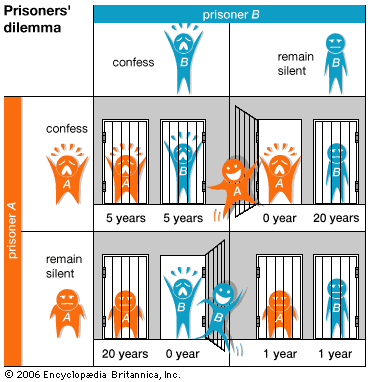
The Prisoner’s Dilemma:

self-interest will always result in each prisoner being worse off than if they had cooperated with each other. The most basic assumption—that we all act only in our own self-interest—is simply not true.

Imagine Players A and B are drug companies, and the pirates are those producing generic pills in a developing country. By fighting the pill pirates in this case, neither player stands to make a great deal of money, because the new market doesn’t have much. But not allowing people access to life-saving drugs means people will die needlessly, piracy will be inevitable, and the company’s image will be tarnished. But if Player B starts producing drugs in this market and competing with the pill pirates, they will gain market share (which could become profitable in time), save lives, and improve their reputation as a brand.


Conclusions
"Pirates are taking over the good ship capitalism, but they’re not here to sink it. Instead they will plug the holes, keep it afloat, and propel it forward.

"Looking at the history of youth movements, the social experiments that took hold by figuring out new ways to share, remix, and produce culture, in the long term, the benefits of this new, more democratic system seem clear. It is down to every one of us to approach the Pirate’s Dilemma from our own unique perspective and to apply the best option to our particular situation.
Over the past few decades in the West, we have entered a period of hyperindividualism, which has its pros and cons. But the power of billions of connected individuals, now flexing more power than markets, governments, and corporations using new ideas our economic model cannot yet comprehend, should be welcomed.

"Piracy isn’t just another business model, it’s one of the greatest business models we have.
Acting like a pirate—taking value from the market, or creating new spaces outside of the market and giving it back to the community, whether it’s with free open-source software or selling cheap Starbury sneakers—is a great way to serve public interests and a great way to make an authentic connection to a new audience.
Where are we going..?


http://thepiratesdilemma.com/category/uncategorized

Friday, 5 October 2012

My talk at YorkCVS on "why we no longer need organisations"

Brief: In the 21 century the power of networks may replace the power of organisations in driving social change. The power of the internet has now meant that the structures needed to support an organisation as a physical entity can now be done in alternative cheaper ways, and the rise of hybrid legal structures means the old method of "group then act" can be freed up to "act then group". (See Clay Shirky on organising without organisations)

This means can avoid many of the failures of social programmes, political wrangling and react much quicker to drive genuine change. This 40 minute talk at York CVS will showcase organisations and movements which are challenging existing institutions, organisations and hierarchies..


Event 29th Oct. You can book on for FREE here: http://www.eventbrite.co.uk/event/4442555804

Monday, 1 October 2012

How we interpret the world.. (or why i'm impatient for the future)

I'm always intergued by things that help us interprite the world. In the last 5 years i've been obsessed by a series of different topics, absorbing everything and then moving on (history of the 21C, contemporary art, violent arthouse cinema, luck, coaching, homicide, facts......)

So i think there wilkl be some fundamental changes in tools that help us interprite the world. I can;t wait until nationatrust places have wifi so i can check wikipedia in there, or do a virtual tour of my own choosing. or just use the place as a jumping off point for my own thoughts....


I can't wait until layar bring out a useable augmented reality app.


and i can't wait until normal interpretation in museums, art galleres, shops, airports, newspapers, everywhere looks a bit more like this:


I think information and representation is going to get so much easier. I think layers of information will be SO MUCH FUN. we will be able to see anything in anything, the object will become largely meaningless without interpretation, and for the first time (like the written bible made the democratisation of Gods word) we will be able to chose our story.

I am impatient for the future.

Tuesday, 18 September 2012

How the national trust is finding its mojo.. (from @guardian)

(Here's the reason i left third sector infrastructure to join the national trust.
Progress is slow-ish, as you can expect in a massive org, but i can guarentee it is happening..- The bold highlighting is mine - warning LONG..)

How the National Trust is finding its mojo

"The National Trust's look-but-don't-touch mantra is out. Now it wants to open up its land and houses to local people, be it for school plays, dressing up, camping or vegetable plots. And it's all starting in a newly acquired pile in Northumberlan The Guardian. Feb 2011
    Seaton Delaval Hall in Northumberland
    Seaton Delaval Hall in Northumberland was saved by the fundraising efforts of 11,000 local people.
    A few minutes' drive from Newcastle central station, at the end of a mile-long, tree-lined avenue, the National Trust's newest acquisition rises drama­tically from sweeping lawns against a ragged Northumbrian sky. Designed by Sir John Vanbrugh, architect of ­Blenheim Palace and Castle Howard, Seaton Delaval Hall was completed in 1731 and, though badly damaged by fire in 1822, retains all its stark splendour. In the view of most experts, it is ­probably the finest surviving example of the English Baroque. 

    We know the National Trust, don't we? At least, we think we do. It occupies a place in our national consciousness roughly akin to that of the BBC: uniquely British, a treasured national institution without which the nation would be infinitely the poorer; broadly speaking a Good Thing. Astonishingly, some 3.8 million of us (up 300,000 in the last three years) pay its annual membership fees of between £35.63 for a single adult to £61.50 for a family, and 55,000 of us volunteer in the 600,000 acres of countryside, 700 miles of coastline and 350-plus ­historic houses and gardens that it ­presides over for, in the words of its founder ­Octavia Hill, "the everlasting delight of the people". Last year, we visited those properties just under 15m times (18% more often than in 2008); we breathed the fresh air of the trust's open spaces more than 100m times.

    But that doesn't stop us having a go at it, of course: exclusive, elitist, samey, paternalistic, look-but-don't-touch, corporate, bureaucratic, over-centralised, too little imagination, too much top-down, not enough bottom-up. 
    "Walk into any National Trust property in the country," its critics cry, "and you could be in any National Trust property in the country." For Tim Smit, creator of the Eden Project, it "peddles comfy nostalgia" and "nurtures a perception that the past was a better place". It's an aristocrats' appreciation society; a playground for the middle-aged middle class. (Those are the critics on the left. On the right, some feel the trust has ­already dumbed down so much it has ­debased all it's supposed to be about. There's not much to be done about them, I fear.)

    But all this makes what the trust is doing at Seaton Delaval, the testbed for a radical new strategy it will unveil at a press conference in London this morning, quite interesting. For starters, says Jane Blackburn, a newcomer on the regional committee, the acquisition itself was unique: it came about only after the trust had consulted 100,000 people, and when locals had, in six months, in the teeth of a recession, raised nearly £1m of the £3m the organisation needed to find. And this was, she says, "in a part of the country that is not, frankly, one of the wealthiest, and most of whom have never visited a trust property, let alone joined". In all, more than 11,000 local people came to four very un-trust fundraising events that they themselves organised: cows were auctioned, a teenage girl gave up her mobile phone for a week and ­donated the money she'd saved, collection boxes were placed in every local pub and cafe.

    "The trust knows it is ­Organisation A," says Blackburn.
    "It wants to become Organisation B. 

    This is the property that will help it get there. Right from the start, the approach here was different." The difference, says Susan Dungworth, a plain-speaking local councillor and one of the Seaton valley residents most passionate about the project, was that "the National Trust didn't come here and say it wanted to make Seaton ­Delaval a major attraction. It didn't say, this is our finest piece of 18th-century architecture, and here's what we're ­doing with it. It said, we want this place to be a local resource; serve the community. Of course I was wary to start with: I thought it was just a way for them to raise more money, and they'd go back to doing things the way they normally do. So far, they haven't."

    'A cultural revolution for the trust'

    According to its strategy document, the Going Local programme will require nothing less than "a cultural revolution for the trust", "a new mindset and a new way of working". Yet it is essential, the organisation reckons, if it is to shake off the perception that "we are some sort of exclusive club for connoisseurs". In an objective dear to the heart of its outspoken chairman, the writer and commentator Simon Jenkins, the trust concedes it must "loosen up", "bring places more to life". Above all, it says, it needs to "put all our properties, built or natural, back at the centre of today's communities," fostering "local pride and a genuine sense of belonging".

     So far, so spirit of the age. What might this mean in practice? Among other ideas, the group plans to breathe new life into several of the hall's other rooms, turning one, for ­example, into an After the Party zone complete with cast-off coats, half-filled glasses and the lingering odours of wine and pipe smoke. There will be fireplaces with blazing log fires and ­sitting rooms you can actually sit in, on period furniture (though maybe not the Chippendale). There will be dressing-up in the east wing, a ­fantastical lumber room of hats, swords, crackling old 78s and black-and-white family photos; camping in the grounds; adventure trails in the woods; leek-growing competitions. The volunteers, says Dungworth diplomatically, "are not all what you'd call your traditional National Trust-type volunteer". In short, says Blackburn,

    Seaton Delaval "is basically going to be a huge great village hall, that happens to have been designed by Vanbrugh". If all this alarms the trust's more ­traditional adherents, they are making a fair stab at disguising it. "I'm one of the old 'look and learn' school, I have to confess," observes Dixon, who first visited the hall as an undergraduate nearly half a century ago. "I've had to loosen my stays a little. But I'm ­completely in agreement with all this. We'll still be looking after all these wonderful things, you know. Just in a rather more generous, a rather less ­cautious sort of way. I'm a curator, not a conservator."

    Conservative culture

    It all sounds extremely laudable. To what extent, though, might it be it just one big PR exercise – a cosmetic squall of political ­correctness blowing down the cobwebbed corridors of an insti­tution born, more than a century ago, of a somewhat unlikely alliance between a bunch of liberal, paternalistic aristocrats (who stumped up the money) and some fairly radical Christian ­socialists whose principal aim was to create "open-air sitting rooms" for the urban poor? The proof of the pudding, plainly, will be in the eating. There are people in the trust who feel the organisation's culture is so conservative that this ­initiative will not last the year. Others worry that, bureaucratic as the trust is (although less than it used to be: it is now run by a 12-member board of ­trustees rather than a 52-member, largely unelected council), it has ­accomplished a lot, and devolving big decisions to local property managers could be fatal. Still others argue that the corporate clout of a big brand may have produced a certain uniformity of experience, but has also helped secure the trust's barely break-even finances. Clearly the change will be far-­reaching, and difficult for some. But around the country, there are already other properties and projects showing how it might work. In Gibside, the 600-acre former estate of the Bowes-Lyon family just outside Gateshead, 

    Mick Wilkes – whose background is solidly in community development – has turned the walled garden into a sort of mini social services: four local schools have growing plots there, as do patients from the secure ward of a local NHS hospital and Norcare, a charity supporting the socially and economically excluded. There's a booming farmers market, and Wilkes got the local cubs and scouts in for a weekend to design a wild woodland playscape complete with log bridges, tunnels and climbing walls. There's a family campsite up the hill, and the derelict stables have been turned into a residential centre for schools and youth groups and workspace for the ­local arts and crafts community. A local writer, Lynn Huggins-Cooper, organises creative writing and storytelling events for all ages, and ghostwalks in the woods.

    "The idea, really, is to get all the doors open, and keep them open," says Wilkes. "It's about saying 'Yes', not 'No'." Down in the south-west, Simon ­Garner, who as area warden for south Devon looks after 12 miles of coast and 3,000 acres of land, said "Yes" when a local association in Wembury asked if it could have some for allotments. "They didn't expect it," he says. "A few years ago we were definitely seen as aloof. We did a policing job.

    "Community ­engagement was something you tried to bolt on, as an afterthought. Now it's the starting point." Sitting in a mullioned room in ­exquisite Cotehele, overlooking the Tamar river, Tamsin Butler, in charge of innovation for the trust's outdoor spaces in the region, says the organi­sation is "discovering its ears". Butler is working on encouraging more ­camping on National Trust land, more mountain biking, more woodland gyms, more tree-surfing, more ­kayaking.

    "We have to break down those barriers, show we have something for everyone." One innovation has been to take on Robyn Davies, a startlingly dynamic former British surfing champion who has organised a series of high-profile events raising the trust's profile and relevance among an audience far ­removed from its traditional base. ­Besides holding paddling contests, beach clean-ups and the inaugural World Bellyboard Championships, ­Davies has recruited six of the country's leading surfers as National Trust ­ambassadors. All ride with NT stickers on their boards. "The trust has 40% of the coastline in Devon and Cornwall," she says.

    "It's about connecting people to that environment, making them ­understand the importance of looking after it. It's a small thing, but it's kids saying: 'My hero surfs on a National Trust logo. My gran belongs to that. What's that all about?'" The perennial battle inside the trust has always been that between conservation and access, preservation and enjoyment. "But really, it needn't be," insists Harold. "Not every room in every built property has precious textiles. We own lots of land; not all of it is equally sensitive." Marching through Plym Bridge woods, Colston agrees:

    "We've been a properties and places organisation; we need to be a people and activities organisation." There is, plainly, ­enthusiasm on the ground for the trust's new strategy. For director ­general Fiona Reynolds, Going Local is both perfectly timed, and "a liberation for a lot of us". In the past, she says, "I think somehow we've lacked confidence. It has been reassuring to us to give out a message that we're only for certain kinds of people, that we're country houses and cream teas. And don't get me wrong; those people are very important to us, and ­always will be. "But paradoxically, the recession has given us confidence. People voted with their feet. It's proved to us there's an almost visceral human need for beauty, for places to escape to, to reconnect, to enrich our lives." Will there be opposition? "There are, obviously, things that need protecting," says ­Reynolds, carefuly. "But we have been a little too 'Look, but don't touch'. We're not out to trash the collections, obviously not. What we're saying is: 'You may not be able to touch this. But look what you can touch!'

    In the end, if we're to truly fulfil our original, radical purpose, we have to reach out in this way – to local residents, to people who feel the National Trust isn't for them. We have to make contact with people in a new way."
    www.guardian.co.uk/culture/2010/feb/10/national-trust-opens-its-doors

Quotes and thoughts from the nationaltrust Going Local strategy.. #localism

"If we're to truly to fulfil our original, radical purpose, we have to reach out in this way – to local residents, to people who feel the National Trust isn't for them. We have to make contact with people in a new way.." 


So what might this mean - here's some some suggestions from me:
  1. Hyper-local = Going-Local, discover possibilities together. 
  2. When we were little we were all artists, inventors, engineers and visionaries of a new world. 
  3. New community culture/ - school plays, dressing up, camping or vegetable plots.
  4. Releasing community potential close to where it lives.
  5. Tapping into the wealth of knowledge and experience that exists in our vast supporter base. 
  6. Using buildings in different way (Seaton Delaval Hall "is basically going to be a huge great village hall, that happens to have been designed by Vanbrug”).
  7. Reconnecting people with their special places.
  8. Allow people to enrich their lives, to grow things..?
  9. We've been a properties and places organisation; we need to be a people and activities organisation..
  10. Freedom within a framework that links strategic visioning of a large organisation with mass participation in defining what they means and having the freedom to get on with it.

Saturday, 8 September 2012

Legal structures made simple.. (from @villagesos)

Some thoughts on prison and violence and new models of living..?

I've been reading Wasted by Mark Johnson and I've picked out a few extracts about his time in prison:
  1. Violence in prison is not that different from the violence that many offenders have faced in early life.
  2. The violence in the system reinforces the notion that violence is a normal and acceptable part of life outside prison.
  3. The violence in prison makes it easier for released offenders to act and see themselves as an offender  and not think twice about more violence.
  4. People become what we they do. So prison is a pretty good way of making hardened violent life-criminals..
He goes on to describe the rehab place where he tries to get clean. Its a massive old house in the middle of nowhere, and its where where JR Tolkien wrote Lord of the Rings. Now as something who works for the national trust does this show us something about the value of places to change lives? Is it easier to have perspective on where you want to be in a beautiful historic backdrop than a council estate..?

So i've been thinking a lot recently about the cost of keeping one human being alive. Keeping myself in food and shelter currently costs quite a lot of money. but we could organise it so that the basic living of food and shelter was much much much much cheaper. we just have to change the system.

so what could all this look like..?


What about buying a big old house somewhere (on a mortgage through a company) and setting up a house for people leaving prison, or needing respite, but on their own terms. we could call it turnaround or something. So they wouldn't be stuck in a flat on their own, but neither would they be part of any scheme. we grow the food we need, and people come and go. 

does this sound so stupid? 
would people just abuse it? 
have catch 22 or someone already done this?
does it sound too much like a cult?
is it ridiculous putting people's choices in their own hands?

Thursday, 23 August 2012

Active leisure time - what gym membership says about potential volunteering..

Active leisure time - what gym membership says about potential volunteering..

Firstly some stats from market research world:
  1. Almost 4.5 million UK adults (15+) have a gym membership, an increase of almost a million since 2000.
  2. A third of them are aged 15 to 24 and they are over 60% more likely than the average adult to be single. Since 2000, the number of gym members aged 65+ has increased almost 70%.
  3. Only 27% of gym members regularly go to the gym.
  4. Their average household income is 35% higher than that of the average adult.
  5. They are 18% more likely than the average adult to be heavy consumers of chocolate bars.
  6. However, over a third of gym members always think of the calories in what they eat.
  7. They are over 50% less likely than the average adult to specially choose to watch Heartbeat.
  8. Gym members are over twice as likely as the average adult to be in the highest quintile for cinema exposure.
  9. They are over 50% more likely than the average adult to agree that when they need information, the first place they go is the internet and they are over 60% more likely than the average adult to access health-related websites.
  10. Female gym members will spend on average 35% more on shoes and 29% more on handbags than the average woman.

So what can we learn from this growth about volunteering. We know we're moving from 'obligation-led' volunteernig to 'fun-led' volunteering (see @ncvo participation stats)
There are parallels between the civic core, and the education levels of gym goers.

Could we realistically see a massive increase in people who want to move "from viewing to doing" in their leisure time..?

Could we build something that meets their needs..?

Sunday, 19 August 2012

What can we learn from all the "what can we learn from" blogs on the Olympics volunteers..?


What can we learn from all the "what can we learn from" blogs on the Olympics volunteers..?

Remember there were 240,000 applicant, 40% of whom had never volunteered before. 

If nothing changes, will return to non volunteering in a few weeks. Here's a few links of interesting commentary:
  1. Can the Olympic experience help change the face of volunteering? http://www.guardian.co.uk/voluntary-sector-network/2012/jul/19/olympics-change-face-volunteering
  2. A blog from phil coogan from nesta about where we take this: http://www.nesta.org.uk/blogs/public_services_lab_blog/Standing%20out%20from%20the%20crowd
  3. Guardian professionalblog: http://www.guardian.co.uk/sport/2012/jul/17/london-2012-games-makers-800-roles
  4. A forum for people looking for accommodation that showed these new volunteer organising themselves (like a local version of airb&b or couchsurfing..?) http://www.gm2012accommodation.org.uk/default.aspx?g=forum 
  5. A few 'sector leaders' opinions http://www.guardian.co.uk/voluntary-sector-network/2012/aug/07/best-bits-olympic-legacy-volunteering
  6. Gamesmakers on facebook (1,700 of them organising on the most simple of social networking sites, which is maybe what works when you have a strict time bound purpose..) http://www.facebook.com/2012VolunteerGamesmaker 
  7. The End of Volunteering article (which touches on many of these themes..) http://wearewhatwedo.org/the-end-of-volunteering 
  8. This from the Telegraph on the weekend of getting involved in local sports clubs.. http://www.telegraph.co.uk/sport/olympics/news/9473635/London-2012-100000-volunteers-sign-up-to-Keep-The-Flame-Alive.html

Soooooooooooooooo what's next..? What's stopping something happening with this energy, this passion for change..? 

My top two suggestions would be would be 
  1. a sense of urgency, 
  2. a genuinely people focussed approach. 
Lets give the people what they want, which the Olympics has shown is not what in its entirety we have right now. People care about things, but don't associate 'volunteering opportunities' as a way of doing something about it. And as someone pointed out: at exactly the same time as 70,000 were working for free, the MPs were off on paid holiday..

Will gamesmakers come back home and be the change..?

The most interesting thing to come out is wewillgather, but more on that later..
(tweet the #WeWillGather hashtag, a postcode and the word ‘help’..)


Profile of the new director general of the national trust..

So what can we expect from Dame Helen Ghosh as the new director general of the national trust..? She's 56 so she might be around for less than 10 years..? She has inherited a period of rapid change, so she will implement someone else's change programme. She was chosen ahead of people in the cultural sector, maybe reflecting a strong board who want to lead and an objective eye on how the change is progressing.


Based on a www.bbc.co.uk/iplayer/console/b01lz7yf

Simon Jenkins, the Chairman said "we wanted a strong leader who could get to grips with different part of the organisation that need addressing. Someone who could be a little unpopular. its a bit of a gamble from her, a bit of a gamble from us. but one we were prepared to take.

"A civil service background didn't naturally offer what we wanted. we're waiting to see. it will be very interesting. she has significantly organisational skills which is what we need. 

"I asked her at interview: what would it be like if you had a make a speech against the government. she said she can't wait"

In conclusion, according to radio 4 "They will be led by a figure who has been at the head of leading change in organisations and institutions. 

"Trust members and staff should be prepared for change.."

Saturday, 11 August 2012

York 's voluntary sector strategy in 2 pages..

Components of York 's voluntary sector strategy: - see what you think..

1. More people getting involved in their communities 
2. A constructive dialogue between sectors is established and valued 
3. Strong voluntary sector infrastructure that can support high quality services  and volunteering   
4. Commissioning and funding frameworks that are needs led and offer value for money
5. A city wide asset strategy that recognises the social value in communities taking ownership of their facilities and empowers people to take an active role in creating what they know is needed in their community.   

Outcome 1; More people getting involved in their communities
Volunteering is a powerful force for change, both for those who volunteer and for the wider community.  Together we can support the development of valuable social networks that will strengthen community involvement in the life of the city through

  1. To further develop neighbourhood networks, such as time banking
  2. To promote and embed York 's Volunteering Charter across the partners
  3. To make sure volunteering meets the needs of the most vulnerable people in the City.
Outcome 2; A constructive dialogue between sectors is established and valued 
The voluntary sector has a wealth of experience that can be of great benefit to policy-makers in the statutory sector, by contributing to effective policy development. The voluntary sector also has a key role in enabling the voice of the community to be heard.  This applies particularly to some excluded groups who may be reluctant to engage with statutory partners through: A joint approach to widen our collective reach. A commitment to finding practical ways to maximise voluntary sector representation on key decision-making groups.

Outcome 3; Strong voluntary sector infrastructure that can support high quality services and volunteering   
In order for voluntary sector organisations to contribute successfully to the delivery of high quality services, they need support which meets the needs of a wide range of types of groups in different stages of their development. Through: Increasing the opportunities for communication and collaboration between the voluntary sector and its partners, including the private sector,  via mainstreaming of the successful elements of the Transforming Local Infrastructure Project.

Outcome 4; Commissioning and funding frameworks that are needs led and offer value for money
In the current economic climate it is vital that we work together to establish a robust financial relationship by developing innovative ways of funding services, supported by quality assurance and monitoring.  A joint commissioning and funding framework will help partners take a considered and consistent approach to funding and contracting with the voluntary, community and private sector. 
Priority actions could include: A review of how to improve joint commissioning, given that we have new commissioners emerging, such as the Clinical Commissioning Group or To introduce an integrated commissioning and funding framework by September 2013.

Outcome 5;   A city wide asset strategy that recognises the social value in communities taking ownership of their facilities and empowers people to take an active role in creating what they know is needed in their community.   
Priority actions could include: Joint mapping of assets leading to a directory of spaces 

Thougths..?

Guardian article on the national trust - pros and cons of "going local"..

Here's an editorial from the guardian in 2010 on the national trust..

"It is difficult to conceive of a body as conservative (with a small c) as the National Trust undergoing its very own cultural revolution. Smashing the liberal bourgeoisie is not the first thought that leaps to mind as you munch your way through a slice of coffee and walnut cake in the orangery. But their new strategy, Going Local, which the trust unveils this morning, would represent something of a sea change in the culture of a body dedicated to preserving heritage, and with it healthy servings of tradition. 

The idea of re-establishing the involvement of local communities in the great houses and parks in their midst has much merit. Nearly one-third of the £3m needed to rescue Seaton Delaval Hall in Northumberland, one of England's finest stately homes, was raised locally. So why shouldn't a former miner write in the guidebook about the coal on which much of the Delavals' wealth was founded? 

(and here's a comment underneight that sums up the (equally valid IMHHO) counterview..)

10 February 2010 4:08AM
The idea of re-establishing the involvement of local communities in the great houses and parks in their midst has much merit.
"What do you mean 're-establish' local community involvement? You mean as underpaid servants, ground-keepers, labourers? 'Re-establish'? What are you talking about? What is 're' about it?

A 'National Trust' that sought to reinvent itself for the contemporary world would surely be concerned not only with matters relating to the preservation of aristocratic and bourgeois icons but also with matters relating to the sustainable development of iconic structures upon which our great grandchildren would gaze with pride.

We may appreciate the grandeur of the great gardens and gazebos paid for by slavery and oppression but will we bequeath, to the 'National Trust', artefacts and architectures that tell a more egalitarian and less imperialist story? What will be the 'Jenkins Legacy' other than the re-preservation of stories of inequity? Do tell!

www.guardian.co.uk/commentisfree/2010/feb/10/national-trust

Monday, 30 July 2012

Notes from Barriers to Engagement event in July 2012..

Aim: how to “dismantle the barriers to people engaging in a city”
Or “how to make our institutions more like us/ work for us”

Apathy = "without pain"

Learned helplessness  = learned rationally not to try
  • Map out how the “engagement” process looks like from a user point of view..?
  • What are their motivations for attending..?
  • Can we use “volunteering as staff development?”
  • “choice based architecture”
  • Teach the problem away

Sortition – representative community democracy (on the hawkesworth estate? Major of hawkesworth?) 20 people drawn lots on how the city progresses.
 

Driven by
citizens
Driven by structures

Engagement
Or association


Mapping out entry points:
  • Networks socially mapped
  • Growing social capital
  • Skills, relationship

Barriers to Engagement list:
  1. past experiences
  2. beauracracy/ staff structures
  3. local communication methods – noticeboards
  4. capability and capacity of staff
  5. no time ticking on an issues (chronic rather than acute issues)
  6. cynicism
  7. don’t understand the decision making structures
  8. suspition of certain institutions
  9. specifics groups harder to engage (younger/ BME)
  10. cronyism – usual suspects
  11. lack of a strong cause
  12. jargon
  13. cultural barriers over processes
  14. time to engage
  15. measureing progress
  16. the way we are viewed/ boxed in
  17. assumptions of identity

Drivers of engagement
Engagement forcefield
Barriers to engagement
Politics
Cuts
innovation
Confidence & capability
Lack of cash
Travel
Deprofessionalisation of orgs
Money
Cronic health & social lcare
information
Better services in tough time
Culture of host orgs