Friday, 5 June 2020

A New Normal for City Parks..?


In the midst of Covid there are thousands of people out enjoying their local greenspace, discovering new paths, spending time together with nature. But at the same time there’s tension in public space as public transport is avoided, cafes and bars are asking for outside space, and people queuing for shops need social distancing space.

So, what to do about all this? In a recent YouGov poll only 9% of us wanted to return to life as normal. So how can we help people keep what they’re valuing?

Future Parks Accelerator is helping 9 local authorities (including Edinburgh) to find long term solutions to managing parks and greenspaces. There’s £6million of National Lottery Heritage Fund and government funding, plus £5m-worth of advice and support from National Trust experts in conservation, fundraising, volunteering and green space management. www.nationaltrust.org.uk/features/our-vision-for-the-future-of-parks

As a response to Covid we’re Crowdsourcing what residents and groups could do in the next 3 months to support their council to improve and maintain greenspaces.

What do people think?
  • 63% of us think protecting and enhancing green spaces should be a higher priority after the lockdown
  • 57% felt they were more aware of the importance of such green spaces to mental health and wellbeing
  • 54% agree that people are doing more to help their communities
What have people done?
  • Within three weeks people had set up 4,208 Covid-19 Mutual Aid groups, with 2.5 million members
  • More than a million people registered to volunteer for the NHS and lots for council Covid hub
  • People who have never been involved in their communities are becoming active, including the 20% of population who are facing lockdown alone.
But council budgets are worse than ever, and many voluntary sector organisations have lost all their income, so where is the response to this going to come?


Some suggestions so far have been:
  • 1.       massively increase the number of friends-of groups and make it easy to join them online.
  • 2.       Have an ‘adopt plot type scheme’ in local areas where road closures are happening so we have loads more pocket parks: https://sfpublicworks.org/streetparks
  • 3.       Increase the volunteering offer including evenings, weekends and for families
  • 4.       Help people do more on their own including dropping off tools, giving people permission to work alone and helping people understand the parks work
  • 5.       Crowdsource options and action for every bit of greenspace, woodland, cut through and have a rapid action plan
  • 6.       Set up new online groups to coordinate green spaces like www.incredibleedible.org.uk
  • 7.       Set up citizen juries etc to look at alternatives to metal play parks via Crowdsourced maps, zoom conversations and hub and spoke coordination through open data hubs
  • Alongside this will be a volunteering and fundraising campaign for those who can help. 

Thoughts, suggestions..?? 


Tuesday, 24 January 2017

Volunteers and positive feedback loops presentation


Do we need to profesionalise or amaturise service-..?

Running social projects replicating private businesses feels like a regressive step. Running them like a mat hatters tea party is not great either. I want to run them like I run our human relationships: strong, but flexible. caring but determined.
  • We need chinks of light to let people in and be involved
  • We need things to be scruffy - like peoples lives, not pristine which makes people consumers
  • We need dissatisfied people in order to change
  • we need people to focus on how things could be better rather what what is wrong
Amateurisation might be cheaper, professional might be easier, but i want my world to feel like my human relationships.. 

In short make organisations more like people. Luckily lots of people are already doing this..


Organisations and technology - the human intranet from Andy Gibson..


Sunday, 18 October 2015

What would a completely transparent membership org look like..?

Leeds United is a membership org. Political parties are a membership org. Voluntary Actions are membership orgs - and all do things on behalf of other people supposedly in their best interests.

This is where the issue issue is confused between ends and means. A normally risk averse org would say (and I can feel myself doing it now) where is the impetus to put ourselves above the parapet.? Why open ourselves to criticism. People are inert in packs. Look at the responses to chugging, or charity CEO pay. Leadership means a lot to a lot of people, but it generally doesn't include taking a stand on any of this.

What could we do right now to turn these organisations completely inside out..?
  • Publish all our data by default (an open server) 
  • Externaliase all emails unless confidential
  • Use an intranet with all our members (eg Yammer)
  • use voting methods for everything
  • offer ourselves up as a platform anyone can use..
If this went well we could do it for the largest membership organisation we have - government..

everything and everyone could become a membership organisation by moving beyond the traditional transactional functional supply and demand model. id suggest we're doing this already, but by saying that "you are already a member" in many ways you're preempting that relationship. its where the third sector has always been, its where the private sector is increasingly operating, and its possible (i'm ever hopeful) it might be how we see the government of the future. its certainly more possible in the uk than in europe (with its 'state as provider' model, or in the US with its 'state as enemy' model). 

Thursday, 9 April 2015

Where money comes and goes

The issue of student loans is essentially an inter-generational contract. We pay in during working years for early education and then for older care. If those figures don't balance then we have an issue. We currently have an issue. There has been a load of work done modelling how we move money between generations (the pinch by david willetts being the most obvious), but this is also really good: http://simonpwalker.blogspot.co.uk/p/five-charts-that-explain-your-childrens.html


So housing is a bad example.
As is student debt.
As is adult social care
As is anything to do with state provision.

We don't have many good examples right now of things that are reducing in cost beyond the cheap TVs and electricals and clothes from Vietnam.

The only work currently ongoing is reducing costs (via efficiencies in the current system) and reducing demand (by raising thresholds and making people more responsible for them).

The twin issues of older people needing care, and working families unable to live, rent or buy a house in the same areas seems to me the same issue. We just don't currently have a way of putting the two things together.

One way to change the system long term is to look at the family model so in Spain for example everyone lives with their family while they go to college which significantly reduces costs. And in Italy every older person lives with their family which significantly reduces costs.

The second main option is to significantly reduce the costs of running a household or business. So rent at 40% of our wages is unsustainable in a country where productivity is not growing. Ditto the vast numbers of business everywhere which would cease to run if they had to carry a £200,000 mortgage on the property. Caravan sites, book shops, antique shops, corner shops, hardware stores - who will buy these businesses and run them at a profit?
All in all there is a limited way of moving money around a system. Someone pays, it's just a matter of who and when.

I think we probably need to think a bit more about what we're working towards and how we do it.

Wednesday, 21 May 2014

Where Leisure Meets Social Change - family lifestyles in 2020

What does data tell us about family lifestyles in 2020..? What do people actually want..?

Rampant individualism in the 20th Century doesn't appear to have left the western world any happier. Indeed the classic loss syndrome watching the rise of the developing world. we've even set us systems so we can't enjoy much of our wealth with high costs of living for what we could consider a fairly basic lifestyle (see JRF and its minimum income standard for the UK of £34,900 a year)

And as for our leisure, what does the rise in cafe culture in the UK tell us..?  It might be saying  that we like being individuals in a group context. We like being in groups even when we don’t interact with anyone else. we used to go to the high street to shop, and to libraries to find information. we don't need that anymore (in the main) we need different things, and have to build new institutions for social justice around the things we do need.

We like being part of a tribe, and where we go is now as important as the clothes we wear. Vast numbers of people could fit with membership organisations and causes who need more than a transactional approach to the work they do.
 
Maybe we are moving from a consumer model of leisure to a relational model of leisure. I think this has huge potential for social change if we can give people a way of changing things that fits with their lifestyles. Examples like Movember, Macmillan’s world’s biggest coffee morning given, or even clay shirky's cognative suplus could mean we have huge collaborative global power that we don't feel obligated to do.
 
The civil rights movement was based on individualism, not collectivism. The human rights act is the logical extension of this. Technological innovation always has been the invisible variable that could see the shifthappens in this..? Maybe with facilitated social interaction we can put in place the framework that could see this happening. 

I think its something worth working towards.

Tuesday, 29 April 2014

New hybrid forms of organisations..?

I think we'll soon see new hybrid forms of organisations. Why?
  • People generally want more control but not liability
  • Volunteering rates are down generally
  • people are time poor
  • committee meetings are pretty boring (speaking as a trustee) and often don't deal with the real reasons people joined the charity in the first place
  • Lots of new governance structures have been set up which look for 'patient involvement' or similar
  • There has been an increase in charities over the last 15 years
  • People are more used to being involved (or consulted) on what brands, companies, institutions are doing and expect to be a part of things so consumerism gives (many) people what they want in this area
  • The vast majority of trustees who are used to the current systems are older and will retire soonish.
So what are some options for doing something about it?
Basically we're talking about use over use without ownership. calling the shots without having to do the governance. I know about one click orgs - is there anyway around the governance question or is it just something we need to live with.
Thoughts..?

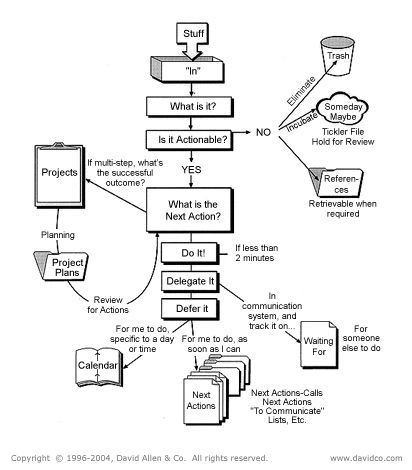
Getting things done.. Your workflow diagram

(What this workflow does NOT show you is what needs doing..)


Using money in the social system in a different way

It used to be the case, when there was public  funding around, that organisations used to write a plan, get some money and employ someone to do the work. This was fine in simple delivery jobs, but a lot of the later jobs were about coordination. And partnerships. And leverage. And it was always difficult to get these things done from a single post. Hence job shares and co-responsibility for roles etc, but all fairly clunky. 

With a lot of service redesign work this kind of work is more needed than ever. But I'm pretty convinced that it can't be done by the "in house post" model. It's neat, and easy to account for but there are just too many variables out of one persons hands. Then there is the added complication of paid workers asking citizens or volunteers to be more work (under the banner of coproduction or other good things), and the blurred line between paid staff working with and asking volunteers/community to do the delivery work.

So the WHAT is probably right, but not the HOW. So what are the alternatives?
  1. Shared money across orgs which increase current posts
  2. Increased delivery funds but not to fund post costs
  3. Increase slush funds for volunteers/community 
  4. Primes and subcontractor model
  5. CVS or other holding funds (thanks @gethynwilliams)
  6. Run a small grants programme
  7. Do something else?
 
I have worked for a large funder and I know the costs associated with some of this stuff, so I would err on the side of low accountability in formal terms but more emphasis on reflective practice long term. 
 
But all this seems fairly clunky. Thoughts?

Thursday, 24 April 2014

For ever, for everyone. What does this mean for the National Trust inthe twenty-first century?

Here's a link to Helen Ghosh talking about "For ever, for everyone. What does this mean for the National Trust in the twenty-first century?" http://www.ncl.ac.uk/events/public-lectures/item.php?for-ever-for-everyone-what-does-this-mean-for-the-national-trust-in-the-twenty-first-century

To cut a long story short its a mix of a charity using the best tools of business building a massive following. and in the future increasingly focusing on land management and use of land (rather than built stuff).

If you fancy listening for 1 hour + questions you can find the full presentation here https://campus.recap.ncl.ac.uk/Panopto/Pages/Embed/Default.aspx?id=4d0c55bf-aaa3-4ab9-9a89-24a3d3ceb4f8&v=1, but i have ripped out three of the slides which i think are interesting.
So what can we learn from how it operates?
  1. its have devolved leadership - a national organisation with local sites under the guise of 'freedom under a framework'
  2. it operates on a consultancy model with client focus and accountability
  3. it generates a lot of money and spends a lot forwarding its mission, above and beyond its operating costs


Its also hyper conscious to a future which will not look like the present, in a timescale which many of us don't. i wonder if we had the same view of human social change as they have of things, what we would do differently..? It also raised the question of where the organisation was in Danny Boyle's 2012 Olympic opening ceremony..? Its more trusted than the BBC and the NHS (particularly recently) but what would get it the point where its as loved as those two institutions..?

Interesting stuff on Octavia Hill the social reformer: http://en.wikipedia.org/wiki/Octavia_Hill And on classification of memberships, and audience profiling.


Thursday, 6 February 2014

Do we need an aggregation strategy for community work.?

I’ve been thinking a lot about what we do about the decreasing funding for community projects and what steps into the void left. Asset based approaches, socially focus, cafes, conversations are all good but tends to come down to meetings. And with a young child and a two hour a day commute I (and lots of other people) don’t make a lot of extra meetings.

So here are 3 models which get around the “we just need to involve more people” mantra.


Model 1 – grow the pie: There is some very good stuff like Genius York, Monmouthshire meetings, Leeds citizen forum and countless others who are attempting to get people involved who wouldn’t otherwise be involved. Fair enough, some are done well, some aren’t. But at least they show willing. Armchair enthusiasts, big data, twitter and sharing – more of this please. I’d also like some stats on this beyond community life surveys about participation rates, and national volunteering rates (which I’ve already written will be fairly healthy for a few years to come). But does it address fundamental issues of social justice (as suggested by the RSA blogs this may be a land grab for the word community: www.rsablogs.org.uk/2014/social-economy/remembering-pete-seeger-community-radical-concept). It might get more efficient in filling in potholes it doesn’t radically change anything.

Model 2 – magic bullets: This can things like social prescribing, some big RCTs, payment by results etc) and there’s a crossover with creative Councils and other things, but this is STILL WORKING WITH NEW PEOPLE in the main. Some of these will move over from the private sector, some with be business minded social tech-entrepreneurs. Part of this suggest that failure demand, and partly an allegation against people ‘whose livelihoods depend on them not understanding’. Hence a massive growth in charities and no data to suggest a reduction in social issues to show for it.

Model 3 – use the pie differently: This is working with new and existing in the social sector. I call this Community Aggregation (as opposed to Aggravation) and it owes a lot to things like David Wilcox’s thoughts http://socialreporter.com, and Julian Dobson’s National Grid of Community Infrastructure http://livingwithrats.blogspot.co.uk/2011/04/national-grid-for-community.html#!/2011/04/national-grid-for-community.html The aim is “to maximise the intentions that exist (almost everywhere if we believe the social attitudes surveys) and turn this desire into something useful”. I sometimes explain that I am interested in the architecture in how things happen because everything is driven by an individual who initially is not getting paid (if you want to cheapen this experience of discovery, call them a volunteer). I think this will be the driving force for the next couple of decades (and not just rampant individualism and consumerism extended into later life). I think we are genuinely finding a new way of living together, not arguing over the spoils of a decade of government interventions.


So we use aggregation. Start with what’s there and maximise it. Maybe use the Law of Marginal Gains from the Sky racing team (aka – does it make the boat go faster? www.teamsky.com/article/0,27290,17547_5792058,00.html). Voluntary Actions are ideally placed to do this, with a rebrand but often don’t have the skills or money to make it happen. In many places NHS or Las are setting up things very similar to CVSs which run on volunteers and aim to “bring the community together”.

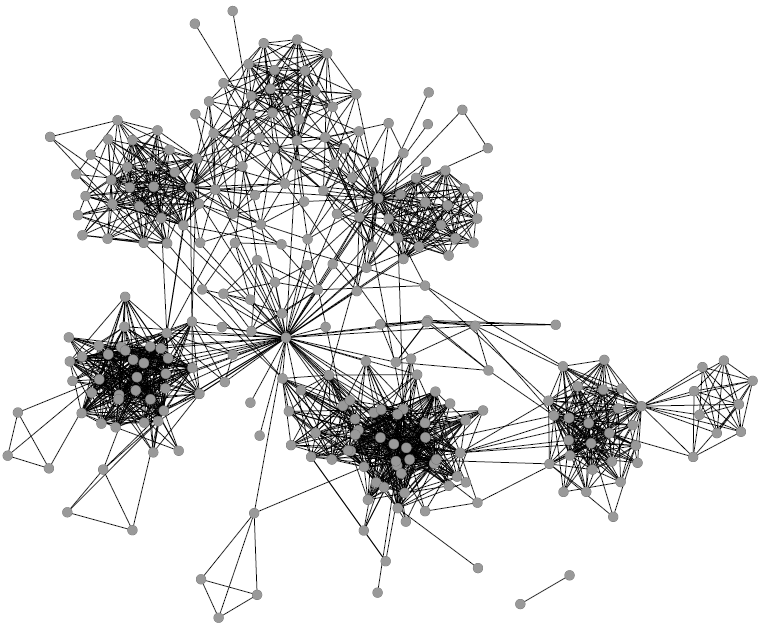
So it needs a communication strategy for a city as well (community nodes model on the left). These new organisation may at a later date be floated off when they realise it’s not easy or cheap to do and then they tender them out like they’ve done in many places over the last 24 months bringing competition and driving the things people do aside from delivering contracts which often make up the most important things they do. Hence grants. It’s not sexy to say it, but grants are often still the cheapest way of getting what you want.

Start with what exists, offer help from a variety of sources (asking for volunteers through www.do-it.org.uk is hugely depressing, and we’re still waiting for something like skill-will to broker resources on businesses. While I’m here have a look at: http://training4good.org/about looking to fill spare training courses with people who might need them – a great example of maximising assets.

So maybe we end up with something like this for a city..?


(There is in fact a Model 3b – just put more money in. It’s always an option, particularly the increasing north south divide. All the ideas I’m suggesting won’t replace the fact that money is pouring out of many towns and cities and its showing.)
Casey

Monday, 13 January 2014

The impact of new community business models

We are starting to see the impact of new community business models. Is this a blueprint for more cutbacks in cultural and community services in the name of austerity or is it the release of control from an overcentralised state.?? People can judge that for themselves (mostly, lets be honest, depending on a political stance & points to be scored), but I think we're beyond debating the theory and moving into the practicals.

  1. Locality have a model of community libraries: http://locality.org.uk/projects/community-managed-libraries-2/ and some front-line workers are starting to whistleblow through blogs (which I guess we’ll see more of particularly as it moves ino the NHS)  : http://www.publiclibrariesnews.com/campaigning/volunteer-run-libraries/practicalities/the-reality-is-very-different-a-volunteer-library-manager-speaks
  2. Rethinking Parks is about changing long term delivery models and ownership of public parks and green spaces: http://www.biglotteryfund.org.uk/global-content/programmes/england/rethinking-parks
  3. Delivering Differently programme for local authorities looking at changing how services are delivered: https://www.gov.uk/government/news/central-and-local-government-team-up-to-improve-local-service-delivery 
  4. The Encouraging Social Action report has a range of case studies and measures: https://www.gov.uk/government/uploads/system/uploads/attachment_data/file/262771/2901062_SocialAction_acc.pdf
  5. Friends of groups are on the increase – google trends shows this graph (although there is no concrete data) http://www.google.co.uk/trends  

Here's some examples from the community libraries data:
Someone suggested to me recently that the ‘social’ in British life is being eroded, that it was ironic that “social housing is bad, but social media good”. In the age of the social everything we seem to like the concept but hate the practical. I'm not sure the wholescale move from civic life to health has been fully understood or debated yet.


So what might replace state institutions in neighbourhoods in 21C.

  • Jobs and growth and typical politician answers etc?
  • peace and love and more money answers?
  • more imaginative ideas like shaping desirability out of market failure?
  • idealists and new catalyst for action?
  • Leveraging existing infrastructure - eg a new role of housing?
With the rolling back of the state – what options are there except less of the same..? We have a lack of imagination which is worst – Q what do we want?: A not the USA and not government control of everything.

Judy Robinson's blog on the north south devide is a good starting place for looking at the long term implications of these kinds of decisions: http://www.involveyorkshirehumber.org.uk/blog/rebalancing-the-north-south-divide/
One thing is for sure, I’m not sure that just recruiting a business development manager will get us there..

Tuesday, 7 January 2014

A Social Operating System and a Coproduction Readiness Tool

I like the idea of a social operating system, a little like Julian Dobson's National Grid of Community Infrastructure. Here's a Chamberlain Forum article that discusses it. I'm not so sold on the core economy stuff, simply becasue i think its unrealistic as a destination right now.. http://www.chamberlainforum.org/?p=1638


It means you could have some metrix and measurement on the indicators necessary for coproduction. 

In line with the 1) thuinking 2) testing 3) doing model we could communicate changes even when there seems to be little actually happening.


What do you think..?

Monday, 6 January 2014

The competitive environment for social action (thoughts on Porters Model)

A lot has been said in public sector circles about the benefits of mutualisation, oursourcing to communites and new community trusts. They increase donations, volunteer numbers and general support. I'd love to see some evaluations of these, but the general case seems to be so.

This has led to two things:
  1. more mutuals/trusts/voluntary deliver, and
  2. a change in attitudes in our institutions about being more enabling
So with a large number of new entrants into the voluntary/ social sphere i was thinking of the competitive environment for social action, in particular Porter's Five Forces:

http://en.wikipedia.org/wiki/Porter_five_forces_analysis


Has anyone done any analysis on this?

There is definitely a change in power in Suppliers (commissioners of services) and New Entrants. There is also the increase power of Customers (clinets, volunteers potentially) who have more information about their options and about the market. There's also fierce competition within the industry as charities compete for a shrinking pot. It would be good to measure an industry (maybe a brand tracker??) beyond the anecdotal attitudes surveys and confidence surveys.


Nice diagram on human and social capital..

Focussing on human capital and social capital seems to me like a good way of matching both skill development (individualism) and community enterprise (collectivity).

I'd like to see someone with a project plan along the lines of Encouraging Social Action: https://www.gov.uk/government/uploads/system/uploads/attachment_data/file/262771/2901062_SocialAction_acc.pdf