
Saturday, 30 November 2013


Friday, 4 October 2013
My submission to @NCVO’s 2015 Project on Volunteering
In reply to ncvo’s discussion paper for the #2015project There are some very odd things going on in volunteering at the moment:
So we're having private and statutory moving into a space where smaller voluntary organisations are retreating from. And the social attitudes surveys tells us people (especially young people) are more cause driven, but less motivated by sectors.
I think in time volunteering/ participation/ involvement will become mainstream, and the organisational framework will learn to sit better around larger groups of knowledgeable activists in some ways a return to the philanthropic organisations of the 12C albeit with more external focus. How this fits with a massive increase in opportunities on Do-it (and what succeeds it) and increasing health and social care needs as the state retreats and the family doesn't step in - I don't quite know.
I’m enthusiastic about the future of www.do-it.org.uk as I like the shared infrastructure principle (small and large orgs have the same way of attracting supporter) but also the critical mass we’re talking about needs a single focus. It’s still 9% of the population who do more than half the volunteering hours. Things like www.wewillgather.co.uk are great, but they rely on the same small number of people to deliver. A bit like the lurkers – maybe we need a strategy to increase the number of creators and contributors from the 90% of lurkers..?

As a trustee of InvolveYH we're looking at how we can involve more people in helping delivering our work, with different levels of involvement depending on people's knowledge and time offered. We think this will help us grow our supporter base whether we call them 'volunteers' or not.
- 1) Statutory bodies are increasingly recruiting volunteers directly as it’s cheaper than contracting a voluntary organisation to do it.
- 2) Increasingly front line organisations cannot afford to provide the infrastructure for volunteer placements when they have PBR monthly targets.
- 3) private sector bodies (predominantly around sports) have learnt through social media metrics that recruiting volunteers as event organisers is both a cheaper deliver mechanism and also adds to the buzz surrounding the event.
So we're having private and statutory moving into a space where smaller voluntary organisations are retreating from. And the social attitudes surveys tells us people (especially young people) are more cause driven, but less motivated by sectors.
I think in time volunteering/ participation/ involvement will become mainstream, and the organisational framework will learn to sit better around larger groups of knowledgeable activists in some ways a return to the philanthropic organisations of the 12C albeit with more external focus. How this fits with a massive increase in opportunities on Do-it (and what succeeds it) and increasing health and social care needs as the state retreats and the family doesn't step in - I don't quite know.
I’m enthusiastic about the future of www.do-it.org.uk as I like the shared infrastructure principle (small and large orgs have the same way of attracting supporter) but also the critical mass we’re talking about needs a single focus. It’s still 9% of the population who do more than half the volunteering hours. Things like www.wewillgather.co.uk are great, but they rely on the same small number of people to deliver. A bit like the lurkers – maybe we need a strategy to increase the number of creators and contributors from the 90% of lurkers..?

As a trustee of InvolveYH we're looking at how we can involve more people in helping delivering our work, with different levels of involvement depending on people's knowledge and time offered. We think this will help us grow our supporter base whether we call them 'volunteers' or not.
Wednesday, 5 June 2013
CIPD presentation – working beyond our hierarchical boundaries
Here's my CIPD presentation for friday drawing on the parallels between volunteering and workforce development models.
Alternative title was "why your best people won't work for you"..
Alternative title was "why your best people won't work for you"..
Friday, 31 May 2013
Behaviour change in healthcare - what the future looks like
I found an excellent picture of the change in behaviour required to sustain a new healthcare model. Like changes to smoking rates, drink driving rates, 5-a-day healthy eating campaigns we can expect this to hugely change how we live our lives. watch it unfold..!


Tuesday, 30 April 2013
Desperately seeking a new organisational model (with own car & gsoh)
 A lot of the conversations i'm having at the moment are about change (obvs). The largest problem i'm having is that this is not a change to, but a change from. Or more clearly: WE DO NOT KNOW WHAT THE DESTINATION LOOKS LIKE.
Lets be clear: there is no-one doing it that we can copy. There is no toolkit. There is not even very good examples that work after the initial enthusiasm has run out.But there are people all over the UK working on it. so we have hope too.
However, there are parallels to draw, associations to make. Voluntary organisations are being bought into public commissioning for their innovation, yet the public bodies are asking them to design projects which are not like anything they have done before. They want services that rely much more heavily on technology and on volunteer effort, and that (whisper it) are simpler cheaper.
So here's a parallel. The evolution of political organisation.
(I have a similar chart at home for how organisations operate, but the final box is still a blank.. )

So where do we start? I was talking to the CEO of a CVS about the amount of time they spend doing tasks which added no value to their work. then you multiply this. but merging is a blunt tool. I think we need to separate the task of running an org from leading an org. and i know some people employ an operations manager and separate this from the CEO. but this still keeps the problems in house.
I'm thinking of some way for small organisations to outsource their business functions (HR, payroll, even staff management in some respects) so that all participants are free to pursue the mission. So something like the fiscal sponsorship that @GMAddVentures are trialling. So something like a solicitors model may emerge for social change organisations along this spectrum:
Contracted out
|
Delivered by partners
|
Staff-led
|
Volunteer-led
|
Customer self-led
|
Now where did i put that GSOH..
(I also like):
- a national grid for community infrastructure - julian dobson
- participatory paradigms - tessy briton
- mititant optimists - david barrie
Monday, 29 April 2013
Strategic Planning for Networks.. (what can we learn from the planning behind wikipedia's 100,000 volunteer editors)
I'm interested in how we can leverage huge numbers of people from around the world towards a collective pro-social aim. The best example of this (and yet to be replicated) is wikipedia.
Below are some slides from their planning explaining how they moved from a mission of "all information for everyone" to 100,000 volunteer editors around the world, maintaining the 4th most read website on earth. This is a bottom-up, consensus-driven, multi-stakeholder model. Diverse volunteers can create fast, fluid and innovative projects that outperform the largest and best financed enterprises..
Lets be completely honest. Our current method of: context, gap analysis and strategic planning WILL NOT GET US HERE. This isn't about a communication strategy, or dissemination or viral applications. Its about how we sell a massive challenge and manage millions of separate contributions into a whole. And we cannot do that by using the same strategy tools.As the slides say: "the plan is not the point, the point is activation".
So how do we make it happen? Here's their 5 steps:
Below are some slides from their planning explaining how they moved from a mission of "all information for everyone" to 100,000 volunteer editors around the world, maintaining the 4th most read website on earth. This is a bottom-up, consensus-driven, multi-stakeholder model. Diverse volunteers can create fast, fluid and innovative projects that outperform the largest and best financed enterprises..
Lets be completely honest. Our current method of: context, gap analysis and strategic planning WILL NOT GET US HERE. This isn't about a communication strategy, or dissemination or viral applications. Its about how we sell a massive challenge and manage millions of separate contributions into a whole. And we cannot do that by using the same strategy tools.As the slides say: "the plan is not the point, the point is activation".
So how do we make it happen? Here's their 5 steps:
- focus on asking Qs
- make a space for it to happen
- focus on people
- model transparency
- fail fast
Wednesday, 17 April 2013
the relational state
I was reading Nestas's report on complaints driving innovation and i thought their diagram on The Relational State was a pretty good summary.


Thursday, 28 March 2013
Gov not funding social change, ever again..?
There were a series of tweets a few days ago from @gethynwilliams that i wanted to pull together and reflect on.
Its basically the stark outline (probably quite rightly) of a world of social change that operates without any government intervention. At all. For all the talk of ideology driving political funding decisions blaming austerity politics we may simply, and irreversibly have returned to the third sector operating wholly outside of government.
I wonder how many people currently working in the third sector would be surprised by it.???
Its basically the stark outline (probably quite rightly) of a world of social change that operates without any government intervention. At all. For all the talk of ideology driving political funding decisions blaming austerity politics we may simply, and irreversibly have returned to the third sector operating wholly outside of government.
I wonder how many people currently working in the third sector would be surprised by it.???

a very difficult time for so many VCS people facing redundancy right now. complete reinvention needed - personally and organizationally.
particularly feel for those working in infrastructure - orgs need very bold new business models. fear may already be too late for some.
1 thing certain - lobbying harder for state cash is pointless. we one of many competing for ever-shrinking cake. this evident for some time.
my advice - give up on government entirely. not sustainable, whoever is in power. orgs and staff need to be radical.
most VCS business plans based on assumption government can lead and fund social change - that's no longer true
@gethynwilliams ...And the challenge now is for the sector to do it itself, rather than ask central gov to ask local gov to purchase better
— Jake Eliot (@housingJake) March 25, 2013@housingjake thanks - and true - and still no guarantee of survival, but at least energies can go into something other than fire-fighting...
@caseymorrison it's a nice idea. personally haven't seen much evidence it will work. 'investors' want high rates of return. you?
@ana_brankovic true that. plenty of folk came into the sector on a specific understanding of how things worked. now it's a new game...
@gethynwilliams All orgs claiming a social purpose have a duty wider than their own delivery role: to push for change to Govt, public, etc.
— Mike Wild (@MikeWildMacc) March 25, 2013
@gethynwilliams Completely agree. hollowing out businesses that can be done cheaper by private sector. but i'm an optimist & £ still exists.
— Casey Morrison (@caseymorrison) March 25, 2013
Thoughts..?
Sunday, 3 March 2013
Insight data on 21 century volunteering.. (presentation)
Insight data on 21 century volunteering - from a national trust conference last year..
- we way we interact with everything has changed, but the way we help people link with causes hasn't
- how we use our leisure time has moved beyond consumption
- if we use platforms and devices for social media we can now connect millions more people
In summary there is a huge audience for something we're terming social leisure. (50,000 people applied to be volunteers for the 2014 Glasgow commonwealth games and as many predicted for Le Tour in Yorkshire.)
The organisation that meets this need will win the prize. The race is on.
Ok Computer from elliottofhook
Micro-volunteering - some practical examples.. (presentation)
Micro-volunteering - some practical examples.. (A presentation i gave at the national trust conference last year)
Basically i think microvolunteering is one of those things that has massive potential if we think about it in a different way. There are lots of platforms, lots of small ideas but nothing that allows small chunks of time for people to do something useful, and feel part of a cause.
This was my attempt to outline some ideas of things we could do on nationaltrust properties, but would probably be applicable for any non profit..
Basically i think microvolunteering is one of those things that has massive potential if we think about it in a different way. There are lots of platforms, lots of small ideas but nothing that allows small chunks of time for people to do something useful, and feel part of a cause.
This was my attempt to outline some ideas of things we could do on nationaltrust properties, but would probably be applicable for any non profit..
Thursday, 28 February 2013
Irreverent localism presentation from 2011
I just found this, but in 2011 I was asked to sum up the new focus on localism in a quick, slightly amusing presentation.
I suggested it focuses on balancing the potentially opposing forces of:
(back in 2011 there was just a picture of a big horse..)
I suggested it focuses on balancing the potentially opposing forces of:
- collaborative local action
- protest voices
(back in 2011 there was just a picture of a big horse..)
Tuesday, 12 February 2013
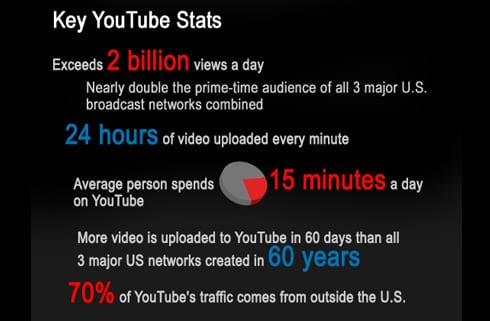
Youtube as a search engine - how i have changed my default in how i search for information
My behaviour in relation to searching and filtering information has started to change quite dramatically after many years doing the same thing. I wonder where they will lead, and how out information portals will change as behaviour changes.
So what do these changes look like..?
 As someone who has promised themselves they will never read another academic abstract, starting in niche information places feels like a good place to start
but the speed of the change in my behaviour has surprised me..
So what do these changes look like..?
- I now use Youtube as my default non work search engine.
- I now use mobile apps in isolation (eg train times) but i find them increasingly less useful in general online activity (eg comparing different travel methods etc), so i'm increasingly looking for cross pollination of different information in a single app.
- I'm subscribe to Youtube channels like i subscribe to blogs on an RSS reader.
- I use flipbook as my RSS reader and occasionally look at twitter on it (mainly for the better display of pics)
- I follow people and search on Slideshare. This is a bit like watching a film over watching a tv programme: you know someone's worked very hard on a slideshare presentation unlike some thrown together blog.
- I use image search before text searching if i know it will have a lot of results (to help with the filtering process) especially if i know they'll be a lot of hits and i'm looking for things of good quality.
- I access more and more websites via mobile and I now notice when a website has a good mobile page.
- I differentiate between durable information and disposable information (mainly this is the distinction between blogs and twitter) along the lines of Thinking Fast and Slow
- The news that Siri could be our default search, therefore eliminating the need for separate apps cones as no surprise. I use it as my default text input device now.
but the speed of the change in my behaviour has surprised me..
Thursday, 7 February 2013
21st Century expectations for leisure time volunteering
Here's a slideshare from @robjackson based on masterclasses for NationalTrust volunteer managers in 2013. It spells out quite nicely the landscape of volunteering, what the changed needs of volunteer support and how we might design something different for 21 century expectations..
In summary what's changed..?
What do we do about it..?
In summary what's changed..?
- Demographic profile of volunteers
- Expectations
- Choice
- increased leisure time (but more things to do with it)
- different childcare needs
- social media & Internet growth
- people's changed connection with causes
- 8% of the population provide half of all volunteering hours..
What do we do about it..?
Friday, 1 February 2013
Digital Civil Society: Initial Thoughts.. (slideshare by Mary Joyce)
Thanks to @karlwilding for flagging this up on twitter. I'm posting it here so i can come back to it..
Thursday, 31 January 2013
Free will participation motivations: see, hear, think, say, pain & gain
This is a different way of looking at motivations or reasons for people's free-will participation.
It starts with the individual, and an empathy map, and the six categories of: See, Hear, Think, Say, Pain and Gain..
It might be useful when seen alongside the Social Attitudes survey - in our motivations in collaborating on otherness..
It might be useful when seen alongside the Social Attitudes survey - in our motivations in collaborating on otherness..

Friday, 25 January 2013
What can we learn from parkrun about self organising groups..?
 What can we learn from parkrun about self organising groups..?
Parkrun:
- Its essentially a franchise model so they know exactly how much it will cost: (about £6,000 including VAT). This includes all the equipment costs, the additional web and hosting costs and all the internal costs required to create the event.
- And they know how it will be funded. They look to the councils, NHS, and other commercial bodies to fund 50% of the start-up costs for each event.
- Its also quite a fixed process, so you can know your time commitment before jumping in to volunteer to set one up: "Our experience shows that we can get a new event up an running in about 6 weeks from the start of your enquiry depending on many variables. We also know that within 12 weeks of starting a parkrun, you will have over 50 volunteers to call on
- They have a list of commercial sponsors who are aligned to the health message (addidas, locozade, pruhealth) which means its sustainable once its up and running.
- They have 14 members of staff supporting who support this process, making it cheap, easy and deliverable.
 Volunteering:
So that gets us to the point where someone wants to come forward to set one up. Why would someone do that without being paid? Well, we do things all the time without being paid (don't call it volunteering, with all that baggage..). its cool to set something up, you get the kudos and you are one of the users of the product.
Then we start to look at people's motivations for what we currently call volunteering: altruism, do-gooding, obligation. Not inspiring stuff.
So how could we make the latter more like the former? (the guardian had a good article looking at this from the Olympics motivations here and from the Third sector research centre here)
There seems to be a gulf between these two stories, one which i think its worth exploring. More structure, planning and franchising might help us get more people involved and get beyond the emotive stories good or bad..
Oh, and i think cold hard data is the way we get there..
Monday, 21 January 2013
On the Relationship Between Sound and the World
This is a little off my normal topic, but i think it has merit both on its own account, but also to draw a parallel between how the social sector selects talent, and how the music industry selects talent.
There are interesting bits in there about change vs conservatism, use of data in something which sounds organic and the difference between what we hear and what we think we hear..
There are interesting bits in there about change vs conservatism, use of data in something which sounds organic and the difference between what we hear and what we think we hear..
Saturday, 19 January 2013
Inter-relational mapping a city..
A few people have been working on interrelational mapping for a number of year (most notably @davidwilcox). This is an example we worked on in York. it shows the interrelational map between statutory organisations and voluntary sector groups

I'm hoping we could do the same thing for BigLocal areas, esp round where i'm living, to map capacity and skills as well as relationships,.

I'm hoping we could do the same thing for BigLocal areas, esp round where i'm living, to map capacity and skills as well as relationships,.
Wednesday, 16 January 2013
Future Scenarios - Joseph Rowntree questionnaire on social trends to 2030
This is a presentation on future scenarios for the social sector. It was the result of a Joseph Rowntree Foundation open forum on the future of the social sector.
The story of change - why citizens (not shoppers) hold the key to a better world
The Story of Change urges viewers to put
down their credit cards and start exercising their citizen muscles to
build a more sustainable, just and fulfilling world. http://storyofchange.org
Saturday, 5 January 2013
Emulating Consumerist Behaviour in Community Involvement
Evaluating how the private sector is looking for consumer action could be a great way of thinking about how we incentivise prosocial behaviour and social action..
The presentation below focusses on involvement in advertising campaigns, moving from passive consumption to sharing and doing.
The language is different but could ring a lot of bells with the social sector..?
The language is different but could ring a lot of bells with the social sector..?
Thursday, 3 January 2013
Why people choose NOT to engage with social issues
This is an interesting presentation looking at why people choose not to engage with social issues. The last 20 years have prioritised information & research in order to force action.
Maybe there is a way to short-cut action on some of our most pressing social issues..?
Maybe we need to turn live-aid on its head..?

Wednesday, 2 January 2013
100 Words on Community involvement & Civic Technologies..
What is it..? Civic technology is the use of digital technologies and social media for service provision, civic engagement, and data analysis. A bit more detail below from Civic technologies.
Improving quality of and accountability in public service delivery
- Help city residents more effectively access and track responsiveness of public service delivery
- facilitate resident engagement with government around service delivery issues
- streamline resident access to public services.
Facilitating resident-driven improvements to neighbourhood quality-of-life
- Enlist city residents to provide new data to support or inform government efforts
- to organise community-based efforts based on that data
- to participate in the development of strategies and policies to address these issues more effectively.
Deepening participation in public decision-making
- Developing more effective ways to collect meaningful resident input (especially from low-income people)

Thursday, 27 December 2012
A difference sort of family christmas
A recent survey suggested different sorts of family interactions could make us happier. Maybe our new years resolution could be to build a different structure for social interaction in 2013..? (maybe even widening the scope of what we currently call family)
- 26% of children aged 8-11 years old and nearly half of all parents said they would like to spend more time together..
- 81% of children aged 8-11 said they watched TV and DVDs with their parents in their free time
- 69% go on activity trips and days out
- 66% go to the park together
- 61% said they went to the cinema together
- 50% played sport
- 52% went on walks
- only 2 per cent of 12-15 year olds want to spend less time with their parents
According to parents:
- 72% watched TV together.
- 47% went to the park
- 46% went on activity/day trips
- 37% went on walks.
Monday, 24 December 2012

Monday, 17 December 2012
Sunday, 16 December 2012
Sunday, 9 December 2012
Some stats on our inclination for involvement..
Capable Commmunities: Citizen-powered public services has found that
- 42% of people would attend a regular meeting with their neighbourhood police team
- 18% would volunteer at a police station
- 20% would be willing to commit to mentoring a child struggling in the education system
- 46% said they were willing to keep an eye on an elderly neighbour
- 33% said they would regularly drive an elderly person to the shops
- Over 90% however believe that the state should retain responsibility for delivering most key public services.
Wednesday, 5 December 2012
My Favourite Steinbeck Quote (and its East of Eden not Grapes of Wrath..!)

"The American Standard translation orders men to
triumph over sin, and you can call sin ignorance. The King James translation
makes a promise in ‘Thou shalt,’ meaning that men will surely triumph over sin.
But the Hebrew word, the word timshel — ‘Thou mayest’ — that gives a choice. It
might be the most important word in the world. That says the way is open. That
throws it right back on a man.
"Now, there are many millions who in their
sects and churches who feel the order, 'Do thou,' and throw their weight into
obedience. And there are millions more who feel predestination in 'Thou shalt.'
Nothing they may do can interfere with what will be. But 'Thou mayest'! Why,
that makes a man great, that gives him stature with the gods, for in his
weakness and his filth and his murder of his brother he has still the great
choice. He can choose his course and fight it through and win... And I feel I
am a man. And I feel that a man is a very important thing - maybe more
important than a star. This is not theology. I have no bent towards the gods.
But I have a new love for that glittering instrument, the human soul. It is a
lovely and unique thing in the universe. It is always attacked and never
destroyed - because 'Thou mayest.'"...
"It was your two-word translation, Lee - 'Thou mayest.' It took
me by the throat and shook me. And when the dizziness was over, a path was
open, new and bright. And when my life which is ending seems to be going on to
an ending wonderful. And my music has a last melody like a bird song in the
night. Lee was
peering at him through the darkness.
"'Thou mayest rule over sin," Lee said. That's it. I do not
believe all men are destroyed. I can name you a dozen who were not, and they
are the ones the world lives by. It is true of the spirit as it is true of the
battles - only the winners are remembered. Surely most men are destroyed, but
there are others who like pillars of fire guide frightened men through the
darkness. 'Thou mayest, Thou mayest!' What glory! It is true that we are weak
and sick and quarrelsome, but if that is all we ever were, we would,
millenniums ago, have disappeared from the face of the earth. A few remnants of
fossilized jawbone, some broken teeth in strats of limestone, would be the only
mark man would have left of his existence in the world. But the choice, Lee,
the choice of winning! I had never understood it or accepted it before. 'Thou
mayest rule over sin.'"
John Steinbeck East of Eden

York Volunteering Statistics from 2010 surveys..
Volunteering (stats from talkabout panel march 2010)
×
Half of york’s population have never volunteered
×
24% of york’s population are currently
volunteering
×
Only 15% of 17-34 year olds volunteer
×
Only 17% of social enonomic group DE volunteer (compared
to 29% of ABs)
×
Nearly 2/3 of volunteers do it weekly.
×
Only 5% do so once a month, and only 2%
infrequently.
Motivations for volunteering (of those who already
volunteer):
×
Had free time 51%
×
Saw a need 47%
×
Wanted to use skills 42%
×
Matches life-philosophy 31%
×
New way of meeting people 29%
×
Learning new skills 17%
Motivations for not volunteering:
×
No time 55%
×
Already have a caring responsibility 20%
×
Unaware of what goes on 18%
×
Those 17-34 are twice as likely to say they
don’t have time compared to 55+.
How they find out about volunteering:
×
79% know about the volunteer centre
×
56% knew about York CVS
×
33% know about PSC
×
Nearly twice as many 55+ knew about York CVS
compared to 17-34 year olds.
Wednesday, 21 November 2012
What data does the voluntary sector actually want..? #vitalstatsyh
Vital statistics : what the numbers say about Yorkshire & Humber
Tomorrow is the InvolveYH annual lecture, and there's a lot of open data questions around at the moment which i won't try and duplicate..
 But on my way home I thought about a wishlist for the UK's head statistician (who we're having lunch with tomorrow), and this is what i came up with:
www.guardian.co.uk/voluntary-sector-network/video/2012/jul/04/karl-wilding-ncvo-using-big-data
Tomorrow is the InvolveYH annual lecture, and there's a lot of open data questions around at the moment which i won't try and duplicate..
- NCVO datastore.. http://data.ncvo-vol.org.uk/category/datastore
- using statistical approaches to green space planning http://vsb.li/JNBe0q
- Manchester open data strategy audioboo.fm/boos/1064400
- Nonprofits Collect Lots of Data, But Most Don’t Use It.. http://shar.es/GOV1w
- 'The gains of open data are to found in the critical engagement of participants' http://vsb.li/AAma6y
- New Research: The State of Nonprofit Data from
@NTENorg: http://vsb.li/2TJ8WQ

- census data is good big picture stuff, but we need consensus on a way of using flawed data
- 'scraped' data (ie data that exists but we dont currently know about) on real time social outcomes based on people's individual routes out of poverty
- random controlled tests on social outcomes - hard evidence to support the anecdotal
- causal or relational links between policy areas we're not aware of
- consensus removing politics from poverty based data sets (eg closing of the Citizens Survey & IDS's changing data on Child Poverty)
- off the shelf tools to interpret data in visual ways
www.guardian.co.uk/voluntary-sector-network/video/2012/jul/04/karl-wilding-ncvo-using-big-data
Tuesday, 20 November 2012
What can we learn about social change from the music industry..?
This is a follow on from my pirate post the other day on remixing social change.
What can we learn about social change from the music industry..?
- The trouble with all dominant cultural forms is that they don't invite you in. They just want you to buy the product.
- Music is one of the only truely classless art form.
- The future of music is at first alienating. Its a subculture, genuinely feeling like it's ahead of the rest.
- If we want to remix change we have to have something no one else has.
- What is the opposite of the music that is happening now now? And what do we need to make the bridge easy from here to there?What's your organisation's sound in a sentence?
- What's your recognisable vocal communication singing style in a sentence?
- We need to create something entirely new, something which hasn't been heard anywhere ever before.
- But how do you know it sounds exactly like you and no one else at all?
- What's the timeline of music? What's next?
- This is year zero.
- How can we get people excited again that something is actually happening, something is actually possible. we don't have to argue along the same old lines.
- What comes after this? I ask myself that every morning - what comes after this?
- It has to represent something.
- It has to mean something.
- I ask myself that every morning - what comes after this?
Why We Don't Need Organisations Anymore..
Here's my presentation from last week at York CVS on "why we no longer need organisations". Its a tongue in cheek look at the rise of citizens in social organisations..
Here was the original brief:
- In the 21 century, the power of networks may replace the power of organisations in driving social change.
- This 40 minute talk at York CVS will showcase organisations and movements which are challenging existing institutions, organisations and hierarchies..
Thursday, 15 November 2012
Volunteering rates by nationality..
Volunteering rates by nationality..
- 56% of all Swedish adults volunteer
- Slovak Republic (54%)
- the US (50%)
- Canada (48%)
- the Netherlands (44%).
- Uk - 33%
- The countries with the lowest participation rates (14% to 16%) are Poland, Japan, Spain, and Hungary.
 See the original article here.
____________________
update:
On the demogragics question, this from TSRC on whether postwar generations are volunteering less and less..
"membership of voluntary associations were lower amongst men born between 1955 and 1964 and between 1965- 1974 than for those born in earlier cohorts. For women, those born between 1965 and 1974 also had lower levels of membership than those in previous cohorts, when age was controlled for.
"Whilst membership of voluntary organisations is not equivalent to volunteering, it is a useful indication of involvement in the third sector, and the findings raise concerns about whether such involvement will fall as more engaged earlier generations are replaced by less engaged cohorts."


Saturday, 10 November 2012
Wednesday, 7 November 2012
What can the social sector learn from the experience of franchising in the commercial sector..?
 A new report is launched today on social franchising. Its on what we can learn from MacDonalds and if you put aside the instant cringe/yawn of needing to learn from unhealthy (in all respects) business models i think there's something in here.
Or to put it another way. I think others will see something in here.
and then do something about it.
which will change how we look at and respond to social change.
So these lessons are:
- Design for scale – make sure it easy for others to replicate the processes and systems
- Choose franchisees carefully
- Develop your people
- Test the business model to make sure it is replicable
- Continue to learn and improve the offer to franchisees
- Be three steps ahead of the franchisee
- Use networks to maintain quality and foster innovation
- Create freedom in the framework so that the business model can be adapted to the local situation
- Plan for sustainability – the financial model needs to generate enough for the central organisation to provide support to franchisees.
- Understand and adapt to markets
- Build the brand
Working for a large charity with hundreds of local sites/ organisations i see the clear benefit of operating like this. Its soemthing that 3SC and Locality have done collaboration and evidence under a banner.
I wonder who will create the mass market social change model of the next century..?
Thursday, 18 October 2012
Some thoughts on localism, the role of the state, and the very visible fist of the free market ..
"The tension between local control and the free market represents perhaps the greatest threat to the survival of local voluntary action in this new, post-welfare state world.
Is
that the electorate doesn't generally want things to stay as they are. Also the
labour model of putting money (and therefore choice) into people hands had
mixed results. The ‘end of social problems’ turned into ‘the maintenance of
social problems’..
But do
we have any evidence that shows competition = efficiency..?
It certainly = cheaper. But if the only efficiency is taking money out of working people’s wages (which has negative connotations on the economy, on deprived areas, and on people’s self esteem). Working towards unskilled McJobs can’t be out countries long term strategy. and we have bad case studies on either side (privatising the railways was a disaster, many others regarded as the normal working of a 21 century state)
"Freeing people from the state’s ‘chains.’ is fine, but freedom without capacity to exercise it is hollow."
Yup. On
the other hand I’m not convinced by the those who have been unsatisfied with the status quo for the last 15 years and have the attitude “we need to keep on fighting the government, and get
paid to do it” . What’s the end goal
for that, or is it just platitudes for the chattering classes? and who should have to pay to ensure justice in a free society. not having any support between the individual is not fair, but neither is the middle class tier that is supported by crime (through the criminal justice system) or social service (social workers, or community college educators).
Who should support the system that helps people exercise their individual freedoms..?
Who should support the system that helps people exercise their individual freedoms..?
“One
pathway ahead lies through stronger routine dialogue with public sector paid
staff, trade unions and church or faith groups, who are developing challenges
to policies which are destroying hard-won services. A plea for independence,
free thinking and action lies close to this heart of darkness. Voluntary action
is a complement to our welfare state, not a substitute for it.”
Yup. So we
need to work within the systems which are here, not pray for better ones. This
is akin to the behavioural economics argument: lets base public decisions on
what people actually do, not what they say that do. More to follow..
https://www.tuc.org.uk/tucfiles/354/Localism_Guide_2012.pdf
Sunday, 14 October 2012
York Volunteering City-Wide feedback mechanism by 2015 proposal..
York Volunteering City 2015 proposal:
We are trying to:
1. Increase the quality of the current York volunteering offer
2. Raise the voice of the volunteer in designing York volunteering offers
In order to: make York the volunteering city of the UK by 2015
Initial thoughts of yearly focuses:
What model are we testing..?
reforms must be driven by the wishes of the users not the producers
the idea of a city-wide feedback mechanism balances some of the information asymmetry.
We are trying to:
1. Increase the quality of the current York volunteering offer
2. Raise the voice of the volunteer in designing York volunteering offers
In order to: make York the volunteering city of the UK by 2015
Initial thoughts of yearly focuses:
- Year 1: start small. Launch the volunteer charter, and signup 10 VCOs with the city-wide feedbackmechanism.
- Year 2: Grow VCO paid offer. Present 2013 survey results at conference focussing on quality. Implement charter champions throughout York. External investment required.
- Year 3: Commission research on what York’s non-volunteers might want. Build volunteer input: leading on the yearly survey, and support for the charter champions.
- Year 4: have a push on people-led volunteering projects in partnership with the universities. Link up volunteering and giving mechanisms, possibly http://geniusyork.com
- Year 5: work on a yearly menu of volunteering opportunities with a programme of city-wide involvement opportunities (following the Illuminate York model).
What model are we testing..?
- Co-create a city with volunteer actions driving influence and participatory budgeting..
- OR A new volunteer-led operating model for a city: co-ordinated, customer focussed and volunteer led.
- Hertfordshire, Bristol and Newham work on flexi-volunteering:
www.flexi-volunteering.com/the-nesta-project - Wigan creative councils bid focussing on social care volunteering and micro enterprises: http://www.youtube.com/watch?v=fv_9FzhTx1g
reforms must be driven by the wishes of the users not the producers
the idea of a city-wide feedback mechanism balances some of the information asymmetry.
Giving to Strangers: motivations for volunteering..
I like the idea of Giving to Strangers. I don't like the idea of volunteering. Giving speaks of social bonds, of an unwritten social contract, or mutuality and parity. Volunteering is what old people do when they are bored and lonely.
Here's some data on motivations for volunteering:


Or the Do-it Satisfaction Survey (2009)


There's some very good accademic info on rationalism and motivations here: http://jocote.org/2010/05/professional-values
Wednesday, 10 October 2012
Remixing Social Change - A Synopsis of The Pirates Dilemma..
 Warning long post. (quotes from The Pirate's Dilemma - How Youth Culture Is Reinventing Capitalism, by Matt Mason)
"For the last sixty years, capitalism has run a pretty tight ship in the West. Pirates are rocking the boat. As a result people, corporations, and governments across the planet are facing a new dilemma: How should we react to the changing conditions on our ship? Are pirates here to scupper us, or save us?
"The big bang happens when a strange new idea suddenly makes sense to a handful of people, who then transmit it to others. Experiencing one is like a revelation, a glimpse into the future."
"Rappers such as 50 Cent can make $50 million a year without even releasing a record; a graffiti artist such as Marc Ecko can develop his tag into a multinational brand worth more than $1 billion."
"The remix is changing the way production and consumption are structured. open-source ways of working are generating a wealth of new public goods, niche markets, knowledge, and resources—free tools for the rest of us to build both commercial and noncommercial ventures"
 "Punk, empowered ordinary people. Not only did they encourage others to start making music, but also to design their own clothes, start fanzines, and set up gigs, demonstrations, record stores, and record labels."
Capitalism responded by selling us punk.
- In 1989, 58 percent of the U.K. population claimed they were happy, but this figure had fallen to 45 percent by 2003, despite a 60 percent increase in average incomes. Punk combined altruism with self-interest - punk made the idea of putting purpose before profit seem cool to an entire generation.
- Sealand went from being the world’s first man-made sovereign state, but also the first global capital of Internet anarchy.
- The American Founding Fathers pursued a policy of counterfeiting European inventions, ignoring global patents, and stealing intellectual property wholesale. Europeans began referring to them with the Dutch word “Janke,” then slang for pirate, which is today pronounced “Yankee.
- "You need a computer for social change. we now associate good deeds with good shopping."
- "we manipulate an existing media format to create what he wanted, regardless of the conventional wisdom"
Mason's seven abundantly clear things about abundance:
- If you want to beat pirates, copy them.
- "Good business is the best art." - Andy Warhol
- The art of storytelling is changing because of abundance.
- Don't let legal ruin a good remix without talking to marketing first
- Abundance is better than advertising.
- Some good experiences will always be scarce.
- In an economy based on abundance, your business model needs to be a virtuous circle.

Piracy is how inefficient systems are replaced
Cut-’n’-Paste Culture
Humans have always created new things by repurposing old ones.
- Tom Moulton - remixed dance tracks for Gloria Gaynor, but did them initially without her permission.
- The Phantom Menace - Fan Edit began to circulate online in early 2001, a new unofficial version that severed more than twenty minutes of the original, leaving the elements that had bugged many fans—namely the character Jar Jar Binks and young Anakin’s childish dialogue—on the cutting-room floor.
- James Brown is the most sampled man in the history of music, undoubtedly boosted by the hip-hop generation’s obsession with sampling him.
- The BBC has introduced the Creative Archive, a copyright-free library of video and audio available for anyone to use for noncommercial purposes.
The Battle for Public Space:

- "Coca-Cola, Newport, Pepsi, Tagging - it’s the same thing. You see my logo a million times, I will be famous.”
- guerrilla marketing or culture jamming
- Talk Back - to advertising
- "Less Fences = Better Neighbours"
- This isn’t about undermining their ability to earn money. What’s actually being undermined is the very idea of why we work. Our work ethic is more of a play ethic.
- LL Cool J name checking a rival brand in a Gap commercial
- Weaker Boundaries = Stronger Foundations
Memes:
"A meme is when a thought goes out and becomes part of consciousness.
“It took 40 years for radio to have 10 million users...15 years for TV to have 10 million users. It only took 3 years for Netscape to get to 10 million, and it took Hotmail and Napster less than a year....The time it takes for an idea to circulate is approaching zero.”
How to Look After a Virus:
- Let the audience make the rules.
- Avoid the limelight; talk only to your audience.
- Feed the virus according to its size.
- Let it die.
Parkour turned into a corporate circus almost instantly because Madonna, James Bond, and the BBC are already into it. Increasingly, when new forms of youth culture survive, it’s because they are things the media wouldn’t touch with a ten-foot pole - we are pushing people into the margins in order to express themselves. Did Happy Slapping have anything to do with Ultimate Fighting, or Jackass?
 Youth cultures and fads have become marketing tools, but deeper underground, something else is happening. Seth Godin points out in Unleashing the Ideavirus, “It took 40 years for radio to have 10 million users...15 years for TV to have 10 million users. It only took 3 years for Netscape to get to 10 million, and it took Hotmail and Napster less than a year....The time it takes for an idea to circulate is approaching zero.”
Remixing social change
Activists, artists, entrepreneurs, and economists are championing an alternative worldview based on sustainable, democratic, decentralized networks. Multinational corporations now have to move as quickly as underground music scenes.
Three guys in their twenties started YouTube, sell it to Google for $1.65 billion twenty-one months later, and revolutionize the way television works.
Looking at the differences previous generations made with simple things such as hairstyles, turntables, and spray cans, it’s difficult to comprehend just how much new generations and youth movements are capable of, despite the relentless pursuit from corporate cool hunters. A change is gonna come.
The Prisoner’s Dilemma:

self-interest will always result in each prisoner being worse off than if they had cooperated with each other. The most basic assumption—that we all act only in our own self-interest—is simply not true.

 Youth cultures and fads have become marketing tools, but deeper underground, something else is happening. Seth Godin points out in Unleashing the Ideavirus, “It took 40 years for radio to have 10 million users...15 years for TV to have 10 million users. It only took 3 years for Netscape to get to 10 million, and it took Hotmail and Napster less than a year....The time it takes for an idea to circulate is approaching zero.”
Remixing social change
Activists, artists, entrepreneurs, and economists are championing an alternative worldview based on sustainable, democratic, decentralized networks. Multinational corporations now have to move as quickly as underground music scenes.
Three guys in their twenties started YouTube, sell it to Google for $1.65 billion twenty-one months later, and revolutionize the way television works.
Looking at the differences previous generations made with simple things such as hairstyles, turntables, and spray cans, it’s difficult to comprehend just how much new generations and youth movements are capable of, despite the relentless pursuit from corporate cool hunters. A change is gonna come.
- Punk made it very clear that we could do everything ourselves, and purpose should be at least as important as profit.
- Pirates, like offshore radio DJs, create periods of chaos and anarchy, but improve things for the rest of us by doing so.
- The millions of us who remix video games, music, films, and fashion designs are expanding and improving on those industries, forcing those who make the laws to reexamine how we treat intellectual property.
- The new breed of street artists seeking to enhance our surroundings as opposed to vandalizing them act in the public interest, if only unintentionally, by counteracting the advertising cluttering public spaces.
- Thanks to the influence of 1960s and ’70s counterculture, and the rave revolutionaries of the ’80s and ’90s, the dream of creating an all-powerful social machine has been realized in the personal computer.
- Open-source technology has proved to be just as effective as—and in many cases more effective than—free-market competition or government regulation when it comes to generating money, efficiency, creativity, and social progress.
- Hip-hop was born out of a desire to improve society for a marginalized few, but because of its ability to communicate so effectively, now has the potential to improve it for the marginalized many.
- And just as mass culture thought it had figured out how to control and use youth cultures, they evolved again. Mass culture needs to learn from the ways youth cultures behave and think, not just use them for their good looks.

The Prisoner’s Dilemma:
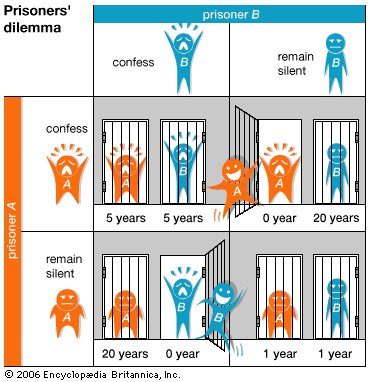
self-interest will always result in each prisoner being worse off than if they had cooperated with each other. The most basic assumption—that we all act only in our own self-interest—is simply not true.


Conclusions
"Pirates are taking over the good ship capitalism, but they’re not here to sink it. Instead they will plug the holes, keep it afloat, and propel it forward.
"Looking at the history of youth movements, the social experiments that took hold by figuring out new ways to share, remix, and produce culture, in the long term, the benefits of this new, more democratic system seem clear. It is down to every one of us to approach the Pirate’s Dilemma from our own unique perspective and to apply the best option to our particular situation.
Over the past few decades in the West, we have entered a period of hyperindividualism, which has its pros and cons. But the power of billions of connected individuals, now flexing more power than markets, governments, and corporations using new ideas our economic model cannot yet comprehend, should be welcomed.
"Piracy isn’t just another business model, it’s one of the greatest business models we have.
Acting like a pirate—taking value from the market, or creating new spaces outside of the market and giving it back to the community, whether it’s with free open-source software or selling cheap Starbury sneakers—is a great way to serve public interests and a great way to make an authentic connection to a new audience.
Where are we going..?

http://thepiratesdilemma.com/category/uncategorized
Subscribe to:
Posts (Atom)