Friday, 3 January 2014

A different way to think about money and the institutions that spend it

The lottery has spent £22 billion on social change since 1997. I remember asking the CEO at the time what he had spent it on (!) and of course he didn’t know and of course its a churlish question, and no-one can answer it about anything we spend our collective money on, but as a colleague said the NHS spends more on healthcare than the whole continent of Africa. Globalisation has provided the funds, resource allocation is the key. 

Seems odd to say in austerity times but maybe money is not the solution anymore. or not the whole solution anyway.

A common question towards the end of a grants term is “how do we sustain this”? Should we not have a strict plan for how this will not be needed anymore in 3 years time? The question on the application form about “sustainability” is laughable. But there are things we can do?

Could we not agree what voluntary orgs in principle we want to keep and make sure they’ll be alright for 2-3 years? It would mean borrowing some money or changing how we spend things. but it seems really odd we haven;t had a proper discussion on what we expect taxation to pay for, and what we expect philanthropy to pay for.  Would that mean the social mission for some was not needed anymore? Some of them. And in which case what would we do with that surplus of talent and time instead..? 

The issue of student loans (for example) is essentially an inter generational contract. We pay in during working years for early education and then for older care. If those figures don't balance then we have an issue. We currently have an issue. 

So housing is a bad example.
As is student debt. 
As is adult social care
As is anything to do with state provision. 

We don't have many good examples right now. 

The only work currently ongoing is reducing costs (via efficiencies in the current system) and reducing demand (by raising thresholds and making people more responsible for themselves)

So is the only way to change the system long term to look at the family model (or the core economy) and what it is able to provide? In Spain for example everyone lives with their family while they go to college which significantly reduces costs. And in Italy every older person lives with their family which significantly reduces costs. 

All in all there is a limited way of moving money around a system. Someone pays, it's just a matter of who and when. 

I remember suggesting to another lottery bod that we put all the lottery money tthrough a single bank account and use the endowment for something (it wouldn't remove the interest that the lottery distributors accrue either as its one step down the chain). It would mean a bit of hassle, and an intermediary account, but its surely not beyond us to move some imaginary money around. Make links between things that don't currently exist that get us beyond the 'least worse position' else end up in. I did 6 years volunteer dispute mediation where the focus was to move people from their positions to their interest. It sounds like we could do that to the rest of the economy. We have the desire, we just don't yet have the mechanisms to get beyond zero-sum. This is not an information problem, and is probably not an inclination problem. It is a logistics problem, the type of game humans are very good at solving with the right incentives. 

So maybe we need a different map of incentives in how we think about social change - as much as we need a different way to think about money and value..

And money might not be the solution, but it certainly alleviates problems. Stand in line for the foodbank and discuss it. 

That's 2014 for me..

Non hierarchical orgs - or does legal structure matter..?

The idea of a hierarchical vol org always seems a bit strange, yet everyone assumes that's the way that an organisation has to be run. Or is it? What if there IS a credible alternative that would save time and liberate staff from seeing themselves as part of one org and not parts of others..? (Disclosure: I don't have one) 

If we could form a network of people who cared about social change in a particular area then we wouldn't need to worry so much about organisations, or the logistics of keeping orgs afloat. NCVO used yammer this last year by opening up its consultation to be had via yammer. Once a week i would log on and quickly add any thoughts i had on the topics being discussed. Better 100 people's 2 minute scribbles that 10 people's 20 min scribbles. (more recently  I've done a similar thing with Genius, and yammer.)

The simple question on what constitutes social change, and what needs focusing on for a more just world is all down to detail. but it would be good to be having that conversation in an open, non hierarchical way..

Organisations need to be managed. But they also need to be owned. Things like one click orgs www.oneclickorgs.com/ are about working within the current model of organising, I'd like to separate these two things as much as possible..

A story from Uganda - of collectivity and different modes of living

Is it really so stupid to think we can live differently? Take an example: can we live collectively cheaper than individually..?

The second world war taught us that we can live very cheaply indeed. Food, clothing and furnishings are all 19th century products which involved moving goods around the world to lower costs. And housing as a collective good is relatively cheap, it only becomes expensive when we choose where we want to live (or more rightly, where we don't want to live). so the cost of living could be fairly low if we organised things differently - right??

So rather than talk about how we get to a low cost life (which might be one of the few options for the millenials building their form of living in the 21st century) this is a story from Uganda where i was for a few months fifteen years ago. I was doing research on musical styles for my degree (sound engineering - and trying to use synthetics to recreate natural sounds).

i arrived in a small town up in the hills in the middle of a power cut. now power cuts are pretty common, but normally you'd be somewhere, and you stay there until the light come back on. with any luck you've got warmth, a candle and a friend to pass the time with. but this was me being dropped off in the middle of pitch darkness on the side of a dusty street. no-one else got off with me, and there was no one around, just me and a bag of my possessions.

Now i can't describe the level of darkness. i waited for me eyes to become adjusted, but they really didn't. the moon must have been obscured, and there wasn't a generator anywhere. it was eerily quite and i became apprehensive about finding a hotel to sleep in, and also about general safety (after a few weeks in Nairobi you'd know why and i was full of the antimalarial laruim anxiety and hallucinations). But i couldn't stay still, so i walked very very slowly up the middle of the street with my arms out in front of me. It sounds strange to say it, but I walked straight into the very first person i met. very slowly, but straight into him.

I was instantly full of paranoia. My first impression was one of malevolence. I thought he was going to attack me, or rob me. 

but of course everything was fine and we laughed and he helped me and i saw him later. and then every day because there are only around 20 people in the village and we play football together etc.

But my first impression was one of malevolenceand i have begun to think how odd that is. what a recent phenomena.

But he took me to someone''s house, and i stayed a few days. I'm not sure if it was a hotel or not. i used taxis that i am not sure are taxis. i hitch-hiked, or i may have just got on buses when i put my arm out.

My point is that there was not much difference between individual and collective. Life is living. And there are not two separate modes of living depenig if we trust people or not. 

Anyone is more interested in a benevolent world should check out Historias Minimas (Intimate Stories in English) and count how many time you expect something bad to happen to the main character. which doesn't. And you start to notice how conditioned we are to think bad things happen. A bit like the Bechdel Test which counts female roles in movies and you start to conclude mainstream films are not normal at all.

So when i think about organising a different way of living i don't think about transition towns, or new involvement methods. I think #digitalbadges and recommendations and verification tools will be useful in changing what we think of as our own, but mainly I think about bumping into strangers in the pitch black- the unplanned opportunities for living, and finding the experience beautiful rather than terrifying..

How to make a decision after an incident..


Top 10 Mistakes in Behaviour Change - from the Persuasive Technology Lab at Stanford

I think we underestimate the role behaviour change is going to play in our lives over the next decade or so. For all the talk of the 'nany state' we're going to see largescale interventions in subtle ways into our ways of living mostly under the banner of saving money.

Health (smoking, fatty foods, cancer, dementia) are the obvious ones, but also family and social interactions are going to be a huge part of the new 'enablign state'. so we'd all better get comfortable with talking about, and often designing processes which are focused on changing other people's behaviour.


Monday, 2 December 2013

The case for a social movement - in note form

(or why voluntary and community organisations are the best place to redefine our social system)

Friday, 4 October 2013

My submission to @NCVO’s 2015 Project on Volunteering

In reply to ncvo’s discussion paper for the #2015project There are some very odd things going on in volunteering at the moment:

  • 1) Statutory bodies are increasingly recruiting volunteers directly as it’s cheaper than contracting a voluntary organisation to do it.

  • 2) Increasingly front line organisations cannot afford to provide the infrastructure for volunteer placements when they have PBR monthly targets. 

  • 3) private sector bodies (predominantly around sports) have learnt through social media metrics that recruiting volunteers as event organisers is both a cheaper deliver mechanism and also adds to the buzz surrounding the event.


So we're having private and statutory moving into a space where smaller voluntary organisations are retreating from. And the social attitudes surveys tells us people (especially young people) are more cause driven, but less motivated by sectors.

I think in time volunteering/ participation/ involvement will become mainstream, and the organisational framework will learn to sit better around larger groups of knowledgeable activists in some ways a return to the philanthropic organisations of the 12C albeit with more external focus. How this fits with a massive increase in opportunities on Do-it (and what succeeds it) and increasing health and social care needs as the state retreats and the family doesn't step in - I don't quite know.


I’m enthusiastic about the future of www.do-it.org.uk as I like the shared infrastructure principle (small and large orgs have the same way of attracting supporter) but also the critical mass we’re talking about needs a single focus. It’s still 9% of the population who do more than half the volunteering hours. Things like www.wewillgather.co.uk are great, but they rely on the same small number of people to deliver. A bit like the lurkers – maybe we need a strategy to increase the number of creators and contributors from the 90% of lurkers..?

 
As a trustee of InvolveYH we're looking at how we can involve more people in helping delivering our work, with different levels of involvement depending on people's knowledge and time offered. We think this will help us grow our supporter base whether we call them 'volunteers' or not.

Wednesday, 5 June 2013

CIPD presentation – working beyond our hierarchical boundaries

Here's my CIPD presentation for friday drawing on the parallels between volunteering and workforce development models.
Alternative title was "why your best people won't work for you"..


Friday, 31 May 2013

Behaviour change in healthcare - what the future looks like

I found an excellent picture of the change in behaviour required to sustain a new healthcare model. Like changes to smoking rates, drink driving rates, 5-a-day healthy eating campaigns we can expect this to hugely change how we live our lives. watch it unfold..!

Tuesday, 30 April 2013

Desperately seeking a new organisational model (with own car & gsoh)

A lot of the conversations i'm having at the moment are about change (obvs). The largest problem i'm having is that this is not a change to, but a change from. Or more clearly: WE DO NOT KNOW WHAT THE DESTINATION LOOKS LIKE.

Lets be clear: there is no-one doing it that we can copy. There is no toolkit. There is not even very good examples that work after the initial enthusiasm has run out.But there are people all over the UK working on it. so we have hope too.

However, there are parallels to draw, associations to make. Voluntary organisations are being bought into public commissioning for their innovation, yet the public bodies are asking them to design projects which are not like anything they have done before. They want services that rely much more heavily on technology and on volunteer effort, and that (whisper it) are simpler cheaper.

So here's a parallel. The evolution of political organisation.

(I have a similar chart at home for how organisations operate, but the final box is still a blank.. )


So where do we start? I was talking to the CEO of a CVS about the amount of time they spend doing tasks which added no value to their work. then you multiply this. but merging is a blunt tool. I think we need to separate the task of running an org from leading an org. and i know some people employ an operations manager and separate this from the CEO. but this still keeps the problems in house.

I'm thinking of some way for small organisations to outsource their business functions (HR, payroll, even staff management in some respects) so that all participants are free to pursue the mission. So something like the fiscal sponsorship that @GMAddVentures are trialling. So something like a solicitors model may emerge for social change organisations along this spectrum:


Contracted out
Delivered by partners
Staff-led
Volunteer-led
Customer self-led

Now where did i put that GSOH..

(I also like):

    Monday, 29 April 2013

    Strategic Planning for Networks.. (what can we learn from the planning behind wikipedia's 100,000 volunteer editors)

    I'm interested in how we can leverage huge numbers of people from around the world towards a collective pro-social aim. The best example of this (and yet to be replicated) is wikipedia.

    Below are some slides from their planning explaining how they moved from a mission of "all information for everyone" to 100,000 volunteer editors around the world, maintaining the 4th most read website on earth. This is a bottom-up, consensus-driven, multi-stakeholder model. Diverse volunteers can create fast, fluid and innovative projects that outperform the largest and best financed enterprises..

    Lets be completely honest. Our current method of: context, gap analysis and strategic planning WILL NOT GET US HERE. This isn't about a communication strategy, or dissemination or viral applications. Its about how we sell a massive challenge and manage millions of separate contributions into a whole. And we cannot do that by using the same strategy tools.As the slides say: "the plan is not the point, the point is activation".

    So how do we make it happen? Here's their 5 steps:
    1. focus on asking Qs
    2. make a space for it to happen
    3. focus on people
    4. model transparency
    5. fail fast


    Wednesday, 17 April 2013

    the relational state

    I was reading Nestas's report on complaints driving innovation and i thought their diagram on The Relational State was a pretty good summary.


    Thursday, 28 March 2013

    Gov not funding social change, ever again..?

    There were a series of tweets a few days ago from @gethynwilliams that i wanted to pull together and reflect on.

    Its basically the stark outline (probably quite rightly) of a world of social change that operates without any government intervention. At all. For all the talk of ideology driving political funding decisions blaming austerity politics we may simply, and irreversibly have returned to the third sector operating wholly outside of government.

    I wonder how many people currently working in the third sector would be surprised by it.???


    Thoughts..?

    Sunday, 3 March 2013

    Insight data on 21 century volunteering.. (presentation)

    Insight data on 21 century volunteering - from a national trust conference last year..
    1. we way we interact with everything has changed, but the way we help people link with causes hasn't
    2. how we use our leisure time has moved beyond consumption
    3. if we use platforms and devices for social media we can now connect millions more people
    In summary there is a huge audience for something we're terming social leisure. (50,000 people applied to be volunteers for the 2014 Glasgow commonwealth games and as many predicted for Le Tour in Yorkshire.)

    The organisation that meets this need will win the prize. The race is on. 


    Micro-volunteering - some practical examples.. (presentation)

    Micro-volunteering - some practical examples.. (A presentation i gave at the national trust conference last year)

    Basically i think microvolunteering is one of those things that has massive potential if we think about it in a different way. There are lots of platforms, lots of small ideas but nothing that allows small chunks of time for people to do something useful, and feel part of a cause.

    This was my attempt to outline some ideas of things we could do on nationaltrust properties, but would probably be applicable for any non profit..


    Thursday, 28 February 2013

    Irreverent localism presentation from 2011

    I just found this, but in 2011 I was asked to sum up the new focus on localism in a quick, slightly amusing presentation.

    I suggested it focuses on balancing the potentially opposing forces of:
    1. collaborative local action
    2. protest voices
    but also that we have a lot more tools now to change the debate, stop the strongest voices in the planning process. I also suggested we don't currently have a vehicle for doing this. Since 2011 arguably the picture has polarised even more with HS2, Section 106 changes and hospital closures.

    (back in 2011 there was just a picture of a big horse..)


    Tuesday, 12 February 2013

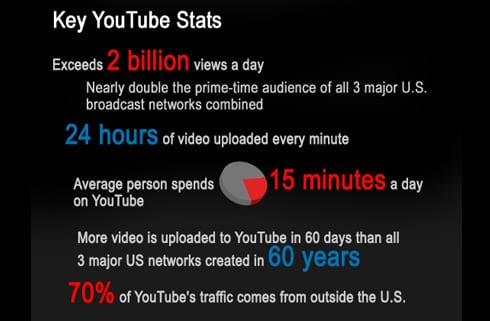
    Youtube as a search engine - how i have changed my default in how i search for information

    My behaviour in relation to searching and filtering information has started to change quite dramatically after many years doing the same thing. I wonder where they will lead, and how out information portals will change as behaviour changes.

    So what do these changes look like..?
    1. I now use Youtube as my default non work search engine. 
    2. I now use mobile apps in isolation (eg train times) but i find them increasingly less useful in general online activity (eg comparing different travel methods etc), so i'm increasingly looking for cross pollination of different information in a single app.
    3. I'm subscribe to Youtube channels like i subscribe to blogs on an RSS reader.
    4. I use flipbook as my RSS reader and occasionally look at twitter on it (mainly for the better display of pics) 
    5. I follow people and search on Slideshare. This is a bit like watching a film over watching a tv programme: you know someone's worked very hard on a slideshare presentation unlike some thrown together blog.
    6. I use image search before text searching if i know it will have a lot of results (to help with the filtering process) especially if i know they'll be a lot of hits and i'm looking for things of good quality.
    7. I access more and more websites via mobile and I now notice when a website has a good mobile page. 
    8. I differentiate between durable information and disposable information (mainly this is the distinction between blogs and twitter) along the lines of Thinking Fast and Slow
    9. The news that Siri could be our default search, therefore eliminating the need for separate apps cones as no surprise. I use it as my default text input device now.
    As someone who has promised themselves they will never read another academic abstract, starting in niche information places feels like a good place to start

    but the speed of the change in my behaviour has surprised me..

    Thursday, 7 February 2013

    21st Century expectations for leisure time volunteering

    Here's a slideshare from @robjackson based on masterclasses for NationalTrust volunteer managers in 2013. It spells out quite nicely the landscape of volunteering, what the changed needs of volunteer support and how we might design something different for 21 century expectations..

    In summary what's changed..? 
    1. Demographic profile of volunteers
    2. Expectations
    3. Choice
    4. increased leisure time (but more things to do with it)
    5. different childcare needs
    6. social media & Internet growth
    7. people's changed connection with causes
    8. 8% of the population provide half of all volunteering hours..

    What do we do about it..?


    Thursday, 31 January 2013

    Free will participation motivations: see, hear, think, say, pain & gain

    This is a different way of looking at motivations or reasons for people's free-will participation.
    It starts with the individual, and an empathy map, and the six categories of: See, Hear, Think, Say, Pain and Gain..

    It might be useful when seen alongside the Social Attitudes survey - in our motivations in collaborating on otherness..


    Bottling goodwill - olympic lessons for every brand..


    Friday, 25 January 2013

    What can we learn from parkrun about self organising groups..?

    What can we learn from parkrun about self organising groups..?


    Parkrun:
    1. Its essentially a franchise model so they know exactly how much it will cost: (about £6,000 including VAT). This includes all the equipment costs, the additional web and hosting costs and all the internal costs required to create the event. 
    2. And they know how it will be funded. They look to the councils, NHS, and other commercial bodies to fund 50% of the start-up costs for each event. 
    3. Its also quite a fixed process, so you can know your time commitment before jumping in to volunteer to set one up: "Our experience shows that we can get a new event up an running in about 6 weeks from the start of your enquiry depending on many variables. We also know that within 12 weeks of starting a parkrun, you will have over 50 volunteers to call on
    4. They have a list of commercial sponsors who are aligned to the health message (addidas, locozade, pruhealth) which means its sustainable once its up and running.
    5. They have 14 members of staff supporting who support this process, making it cheap, easy and deliverable.

    Volunteering:
    So that gets us to the point where someone wants to come forward to set one up. Why would someone do that without being paid? Well, we do things all the time without being paid (don't call it volunteering, with all that baggage..). its cool to set something up, you get the kudos and you are one of the users of the product.

    Then we start to look at people's motivations for what we currently call volunteering: altruism, do-gooding, obligation. Not inspiring stuff.

    So how could we make the latter more like the former? (the guardian had a good article looking at this from the Olympics motivations here and from the Third sector research centre here)

    There seems to be a gulf between these two stories, one which i think its worth exploring. More structure, planning and franchising might help us get more people involved and get beyond the emotive stories good or bad..

    Oh, and i think cold hard data is the way we get there..

    Monday, 21 January 2013

    On the Relationship Between Sound and the World

    This is a little off my normal topic, but i think it has merit both on its own account, but also to draw a parallel between how the social sector selects talent, and how the music industry selects talent.

    There are interesting bits in there about change vs conservatism, use of data in something which sounds organic and the difference between what we hear and what we think we hear..


    Saturday, 19 January 2013

    Inter-relational mapping a city..

    A few people have been working on interrelational mapping for a number of year (most notably @davidwilcox).  This is an example we worked on in York. it shows the interrelational map between statutory organisations and voluntary sector groups


    I'm hoping we could do the same thing for BigLocal areas, esp round where i'm living, to map capacity and skills as well as relationships,.

    Wednesday, 16 January 2013

    Future Scenarios - Joseph Rowntree questionnaire on social trends to 2030

    This is a presentation on future scenarios for the social sector. It was the result of a Joseph Rowntree Foundation open forum on the future of the social sector. 

    We were all asked to imagine the challenges for 2030 and this is what i pulled together..

    The story of change - why citizens (not shoppers) hold the key to a better world

    The Story of Change urges viewers to put down their credit cards and start exercising their citizen muscles to build a more sustainable, just and fulfilling world. http://storyofchange.org
     

    Saturday, 5 January 2013

    Emulating Consumerist Behaviour in Community Involvement

    Evaluating how the private sector is looking for consumer action could be a great way of thinking about how we incentivise prosocial behaviour and social action..

    The presentation below focusses on involvement in advertising campaigns, moving from passive consumption to sharing and doing.

    The language is different but could ring a lot of bells with the social sector..?

    Top 10 mistakes in behaviour change


    Thursday, 3 January 2013

    Why people choose NOT to engage with social issues

    This is an interesting presentation looking at why people choose not to engage with social issues. The last 20 years have prioritised information & research in order to force action.
    Maybe there is a way to short-cut action on some of our most pressing social issues..?

    Maybe we need to turn live-aid on its head..?


    Eight steps to transforming your organisation


    Wednesday, 2 January 2013

    100 Words on Community involvement & Civic Technologies..

    What is it..? Civic technology is the use of digital technologies and social media for service provision, civic engagement, and data analysis. A bit more detail below from Civic technologies.

    Improving quality of and accountability in public service delivery
    1. Help city residents more effectively access and track responsiveness of public service delivery
    2. facilitate resident engagement with government around service delivery issues
    3. streamline resident access to public services. 

    Facilitating resident-driven improvements to neighbourhood quality-of-life 
    1. Enlist city residents to provide new data to support or inform government efforts
    2. to organise community-based efforts based on that data
    3. to participate in the development of strategies and policies to address these issues more effectively.

    Deepening participation in public decision-making 
    1. Developing more effective ways to collect meaningful resident input (especially from low-income people)


    Thursday, 27 December 2012

    A difference sort of family christmas

    A recent survey suggested different sorts of family interactions could make us happier. Maybe our new years resolution could be to build a different structure for social interaction in 2013..? (maybe even widening the scope of what we currently call family)
    1. 26% of children aged 8-11 years old and nearly half of all parents said they would like to spend more time together.. 
    2. 81% of children aged 8-11 said they watched TV and DVDs with their parents in their free time 
    3. 69% go on activity trips and days out 
    4. 66% go to the park together 
    5. 61% said they went to the cinema together 
    6. 50% played sport 
    7.  52% went on walks
    8. only 2 per cent of 12-15 year olds want to spend less time with their parents 
    According to parents: 
    1. 72% watched TV together. 
    2. 47% went to the park 
    3. 46% went on activity/day trips 
    4. 37% went on walks.

    Sunday, 9 December 2012

    Some stats on our inclination for involvement..

    Capable Commmunities: Citizen-powered public services has found that 

    1. 42% of people would attend a regular meeting with their neighbourhood police team
    2. 18% would volunteer at a police station
    3. 20% would be willing to commit to mentoring a child struggling in the education system
    4. 46% said they were willing to keep an eye on an elderly neighbour 
    5. 33% said they would regularly drive an elderly person to the shops
    6. Over 90% however believe that the state should retain responsibility for delivering most key public services.

    Wednesday, 5 December 2012

    My Favourite Steinbeck Quote (and its East of Eden not Grapes of Wrath..!)


    "The American Standard translation orders men to triumph over sin, and you can call sin ignorance. The King James translation makes a promise in ‘Thou shalt,’ meaning that men will surely triumph over sin. But the Hebrew word, the word timshel — ‘Thou mayest’ — that gives a choice. It might be the most important word in the world. That says the way is open. That throws it right back on a man.

    "Now, there are many millions who in their sects and churches who feel the order, 'Do thou,' and throw their weight into obedience. And there are millions more who feel predestination in 'Thou shalt.' Nothing they may do can interfere with what will be. But 'Thou mayest'! Why, that makes a man great, that gives him stature with the gods, for in his weakness and his filth and his murder of his brother he has still the great choice. He can choose his course and fight it through and win... And I feel I am a man. And I feel that a man is a very important thing - maybe more important than a star. This is not theology. I have no bent towards the gods. But I have a new love for that glittering instrument, the human soul. It is a lovely and unique thing in the universe. It is always attacked and never destroyed - because 'Thou mayest.'"...

    "It was your two-word translation, Lee - 'Thou mayest.' It took me by the throat and shook me. And when the dizziness was over, a path was open, new and bright. And when my life which is ending seems to be going on to an ending wonderful. And my music has a last melody like a bird song in the night. Lee was peering at him through the darkness.

    "'Thou mayest rule over sin," Lee said. That's it. I do not believe all men are destroyed. I can name you a dozen who were not, and they are the ones the world lives by. It is true of the spirit as it is true of the battles - only the winners are remembered. Surely most men are destroyed, but there are others who like pillars of fire guide frightened men through the darkness. 'Thou mayest, Thou mayest!' What glory! It is true that we are weak and sick and quarrelsome, but if that is all we ever were, we would, millenniums ago, have disappeared from the face of the earth. A few remnants of fossilized jawbone, some broken teeth in strats of limestone, would be the only mark man would have left of his existence in the world. But the choice, Lee, the choice of winning! I had never understood it or accepted it before. 'Thou mayest rule over sin.'"

    John Steinbeck East of Eden


    York Volunteering Statistics from 2010 surveys..


    Volunteering (stats from talkabout panel march 2010)
    ×          Half of york’s population have never volunteered
    ×          24% of york’s population are currently volunteering
    ×          Only 15% of 17-34 year olds volunteer
    ×          Only 17% of social enonomic group DE volunteer (compared to 29% of ABs)
    ×          Nearly 2/3 of volunteers do it weekly.
    ×          Only 5% do so once a month, and only 2% infrequently.

    Motivations for volunteering (of those who already volunteer):
    ×          Had free time 51%
    ×          Saw a need 47%
    ×          Wanted to use skills 42%
    ×          Matches life-philosophy 31%
    ×          New way of meeting people 29%
    ×          Learning new skills 17%

    Motivations for not volunteering:
    ×          No time 55%
    ×          Already have a caring responsibility 20%
    ×          Unaware of what goes on 18%
    ×          Those 17-34 are twice as likely to say they don’t have time compared to 55+.

    How they find out about volunteering:
    ×          79% know about the volunteer centre
    ×          56% knew about York CVS
    ×          33% know about PSC
    ×          Nearly twice as many 55+ knew about York CVS compared to 17-34 year olds.

    Wednesday, 21 November 2012

    What data does the voluntary sector actually want..? #vitalstatsyh

    Vital statistics : what the numbers say about Yorkshire & Humber

    Tomorrow is the InvolveYH annual lecture, and there's a lot of open data questions around at the moment which i won't try and duplicate..


    But on my way home I thought about a wishlist for the UK's head statistician (who we're having lunch with tomorrow), and this is what i came up with:
    • census data is good big picture stuff, but we need consensus on a way of using flawed data
    • 'scraped' data (ie data that exists but we dont currently know about) on real time social outcomes based on people's individual routes out of poverty
    • random controlled tests on social outcomes - hard evidence to support the anecdotal 
    • causal or relational links between policy areas we're not aware of
    • consensus removing politics from poverty based data sets (eg closing of the Citizens Survey & IDS's changing data on Child Poverty)
    • off the shelf tools to interpret data in visual ways
    If you do nothing else before the event tomorrow, watch @karlwilding's video on "Charities should be the gold standard of transparency.."
    www.guardian.co.uk/voluntary-sector-network/video/2012/jul/04/karl-wilding-ncvo-using-big-data


    Tuesday, 20 November 2012

    What can we learn about social change from the music industry..?

    This is a follow on from my pirate post the other day on remixing social change.

    What can we learn about social change from the music industry..? 
    • The trouble with all dominant cultural forms is that they don't invite you in. They just want you to buy the product. 
    • Music is one of the only truely classless art form. 
    • The future of music is at first alienating. Its a subculture, genuinely feeling like it's ahead of the rest. 
    • If we want to remix change we have to have something no one else has. 
    • What is the opposite of the music that is happening now now? And what do we need to make the bridge easy from here to there?What's your organisation's sound in a sentence? 
    • What's your recognisable vocal communication singing style in a sentence? 
    • We need to create something entirely new, something which hasn't been heard anywhere ever before. 
    • But how do you know it sounds exactly like you and no one else at all? 
    • What's the timeline of music? What's next? 
    • This is year zero. 
    • How can we get people excited again that something is actually happening, something is actually possible. we don't have to argue along the same old lines. 
    • What comes after this? I ask myself that every morning - what comes after this? 
    • It has to represent something. 
    • It has to mean something. 
    • I ask myself that every morning - what comes after this? 


    Why We Don't Need Organisations Anymore..

    Here's my presentation from last week at York CVS on "why we no longer need organisations". Its a tongue in cheek look at the rise of citizens in social organisations..

    Here was the original brief:  
    • In the 21 century, the power of networks may replace the power of organisations in driving social change.  
    • This 40 minute talk at York CVS will showcase organisations and movements which are challenging existing institutions, organisations and hierarchies..


    Thursday, 15 November 2012

    Volunteering rates by nationality..

    Volunteering rates by nationality..
    1. 56% of all Swedish adults volunteer
    2. Slovak Republic (54%)
    3. the US (50%)
    4. Canada (48%)
    5. the Netherlands (44%). 
    6. Uk - 33%
    7. The countries with the lowest participation rates (14% to 16%) are Poland, Japan, Spain, and Hungary. 
    See the original article here.


    ____________________

    update:

    On the demogragics question, this from TSRC on whether postwar generations are volunteering less and less..

    "membership of voluntary associations were lower amongst men born between 1955 and 1964 and between 1965- 1974 than for those born in earlier cohorts. For women, those born between 1965 and 1974 also had lower levels of membership than those in previous cohorts, when age was controlled for.

    "Whilst membership of voluntary organisations is not equivalent to volunteering, it is a useful indication of involvement in the third sector, and the findings raise concerns about whether such involvement will fall as more engaged earlier generations are replaced by less engaged cohorts."


    A new hierarchy of motivation..?


    Wednesday, 7 November 2012

    What can the social sector learn from the experience of franchising in the commercial sector..?

    A new report is launched today on social franchising. Its on what we can learn from MacDonalds and if you put aside the instant cringe/yawn of needing to learn from unhealthy (in all respects) business models i think there's something in here.

    Or to put it another way. I think others will see something in here.
    and then do something about it.
    which will change how we look at and respond to social change.

    So these lessons are:
    1. Design for scale – make sure it easy for others to replicate the processes and systems
    2. Choose franchisees carefully 
    3. Develop your people 
    4. Test the business model to make sure it is replicable 
    5. Continue to learn and improve the offer to franchisees 
    6. Be three steps ahead of the franchisee 
    7. Use networks to maintain quality and foster innovation 
    8. Create freedom in the framework so that the business model can be adapted to the local situation 
    9. Plan for sustainability – the financial model needs to generate enough for the central organisation to provide support to franchisees. 
    10. Understand and adapt to markets 
    11. Build the brand

    Working for a large charity with hundreds of local sites/ organisations i see the clear benefit of operating like this. Its soemthing that 3SC and Locality have done collaboration and evidence under a banner.

    I wonder who will create the mass market social change model of the next century..?